Mixing Metal Finishes: How to Create Balanced, Timeless Interiors
For years, interior design followed a very strict rule: pick one metal finish and stick with it. If your faucet was polished nickel, then your cabinet hardware, lighting, and accessories had to match perfectly. The result was clean and safe — but often flat.
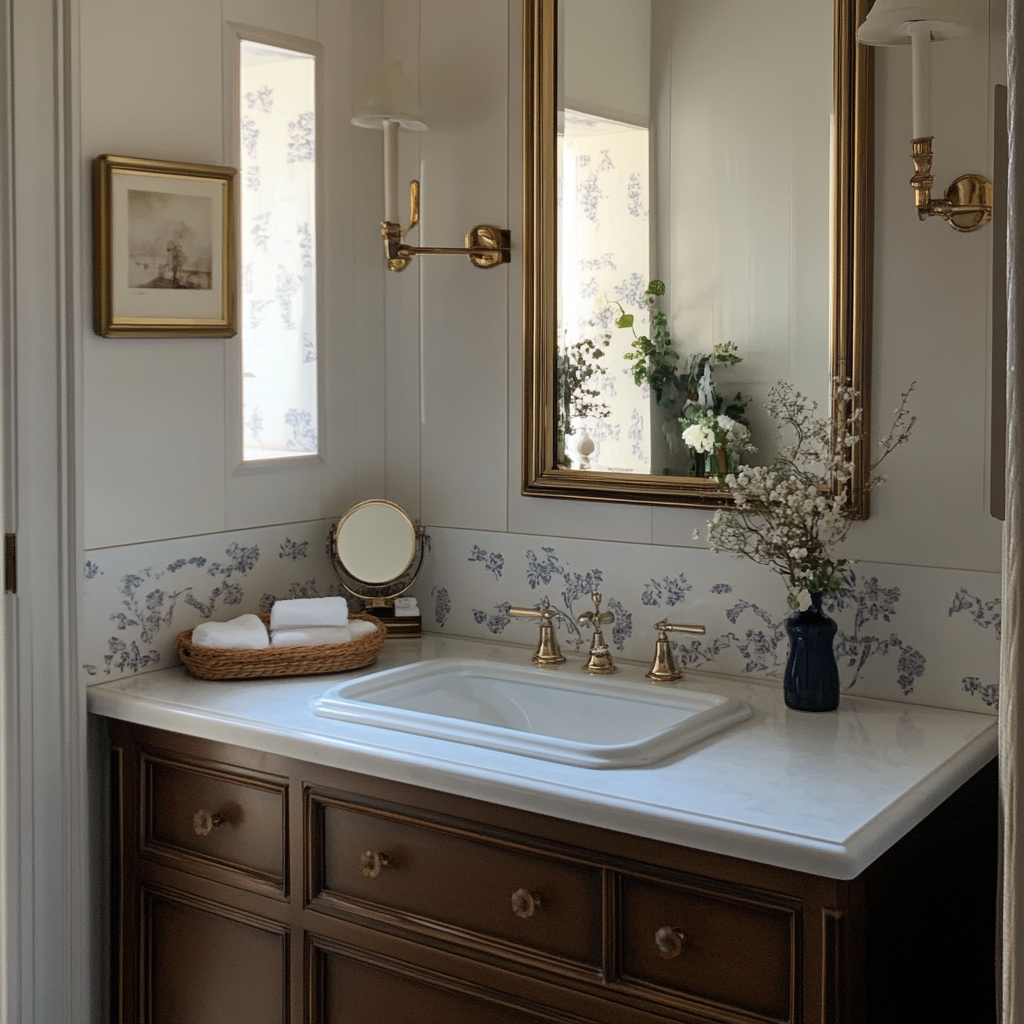
Today, the most timeless interiors don’t rely on perfect matching. They rely on balance.
At Sentenac House Interiors, we approach metal finishes the same way we approach the rest of a home: with intention. Mixing metals adds depth, warmth, and personality, but only when it’s done thoughtfully. The goal is not to create contrast for the sake of contrast — it’s to design a space that feels curated, cohesive, and elevated.
The short answer?
Focus on balance, not matching.
Below is our guide to mixing metal finishes in a way that feels timeless, polished, and completely intentional.
The Core Rule: Limit Your Space to Two Metal Finishes
When it comes to mixing metal finishes, restraint is everything. One of the most common mistakes we see is using too many finishes in a single space. While variety can be beautiful, too many competing metals can quickly make a room feel chaotic or unfinished.
Our rule of thumb is simple:
Limit each space to two metal finishes.
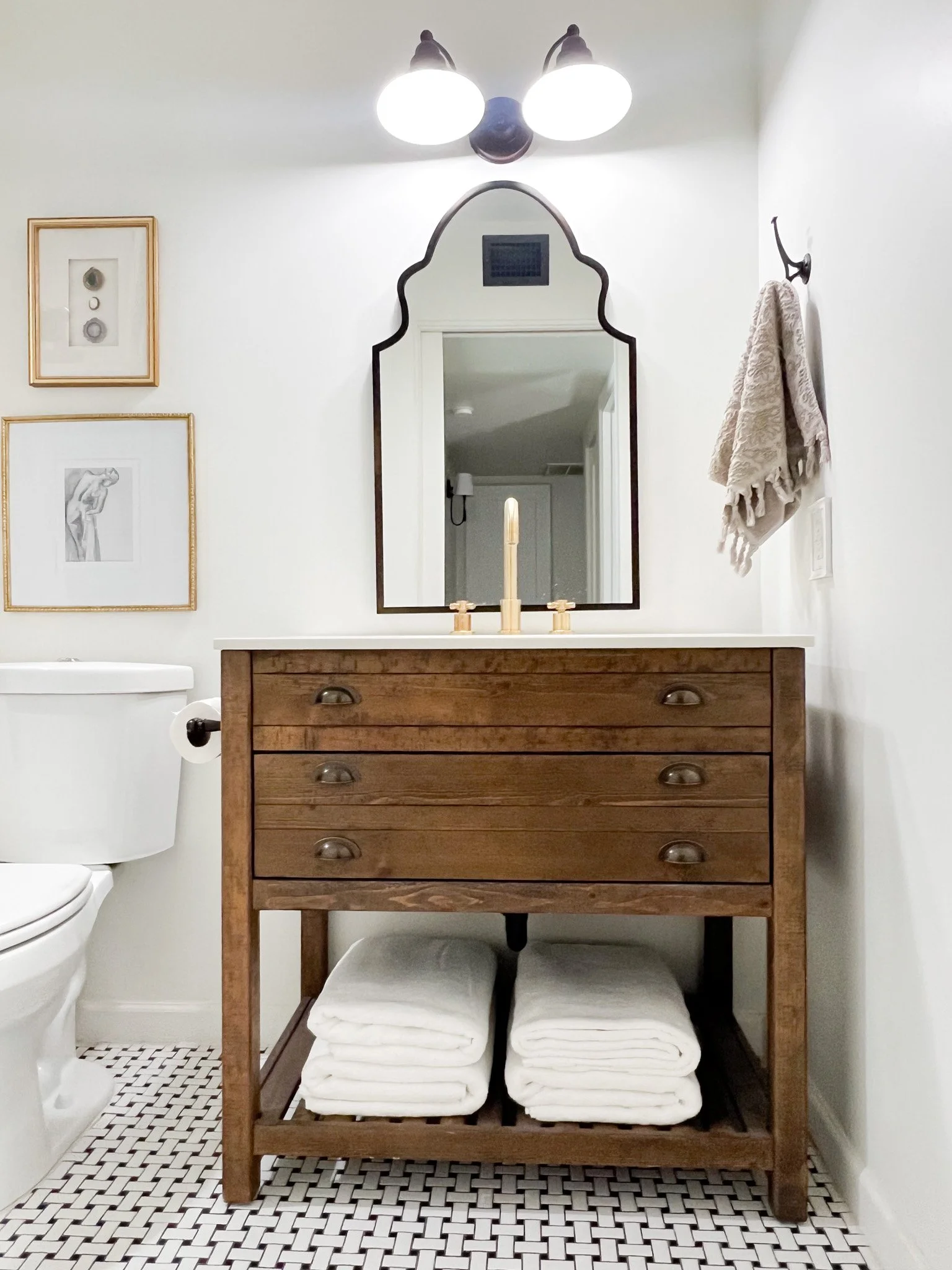
Think of it like casting a movie. One metal plays the lead role, and the second acts as the supporting character. When everything has equal attention, nothing stands out — but when there’s a clear hierarchy, the design feels confident and cohesive.
If you introduce more than two finishes, the eye doesn’t know where to rest. By keeping the palette tight, you create a sense of calm while still adding visual interest.
Establish a Hierarchy: Lead Metal vs. Accent Metal
Once you’ve chosen your two finishes, the next step is deciding which one leads.
The Lead Metal
Your lead metal is the finish that appears the most throughout the space.
This often includes:
Cabinet hardware
Major light fixtures (pendants or chandeliers)
Large, visually dominant elements
Because this metal shows up repeatedly, it sets the tone for the room. A warm brass lead creates an inviting, classic feel, while matte black or polished nickel leans more modern and architectural.

The Accent Metal
Your second metal acts as an accent. This is where contrast and personality come in.
Accent metals often appear in:
Plumbing fixtures
Mirror frames
Furniture details or small accessories
The key is that the accent metal still needs to be repeated. One lone accent almost always looks like a mistake rather than a design choice.

Repeat Each Finish (At Least Twice)
Repetition is what turns mixed metals from “random” into “refined.”
As a general rule, we like to see each metal appear at least twice in a space. This repetition creates rhythm and reassures the eye that the mix was intentional.

For example:
If you use matte black in a kitchen faucet, repeat it in cabinet pulls or lighting.
If brass appears in island pendants, echo it in barstool frames, cabinet hardware, or a decorative tray.
This principle applies to every room — kitchens, bathrooms, living spaces, and beyond. Repetition is what ties the story together.
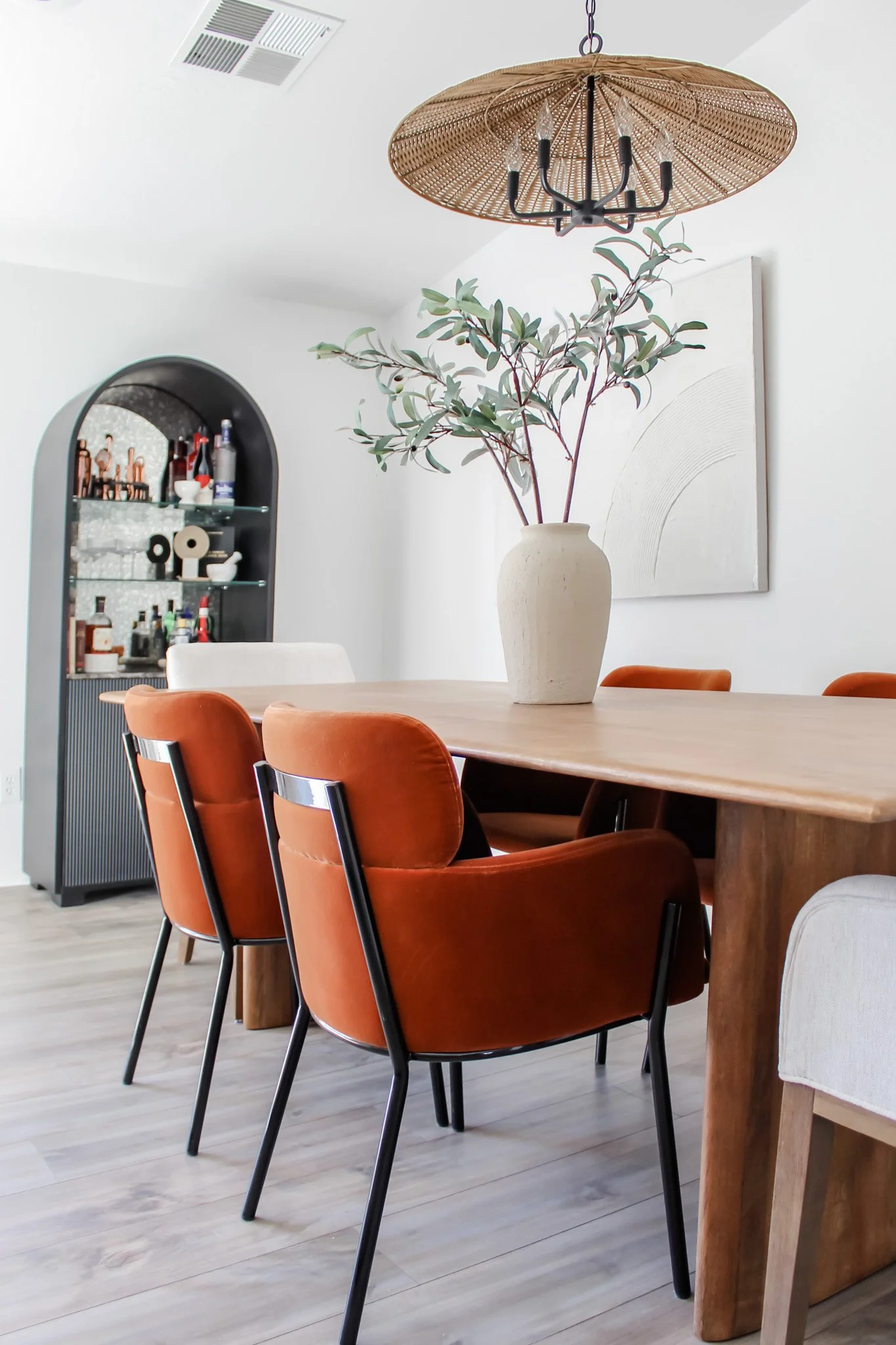
Mixing Metal Finishes in the Kitchen
Kitchens are one of the best places to mix metals because they naturally include a lot of hardware and fixtures.
A common approach we love:
Lead metal: Cabinet hardware and main lighting
Accent metal: Faucet, sink, or range details
For example,
Brass cabinet pulls paired with brass pendants create a warm, cohesive base. A polished nickel or matte black faucet then acts as the accent, adding contrast without overpowering the space.
Distribution matters here. If all of your accent metal is clustered in one corner, the room can feel lopsided. Instead, look for ways to spread finishes throughout the kitchen — island lighting, balancing perimeter hardware, or a faucet echoed by smaller accessories nearby.
Stainless steel appliances can often act as a neutral backdrop, allowing your chosen finishes to stand out without competing.
Mixing Metal Finishes in the Bathroom
Bathrooms require a slightly more disciplined approach because they’re smaller spaces with a high concentration of metal elements.
Our strongest recommendation:
Keep plumbing fixtures consistent.
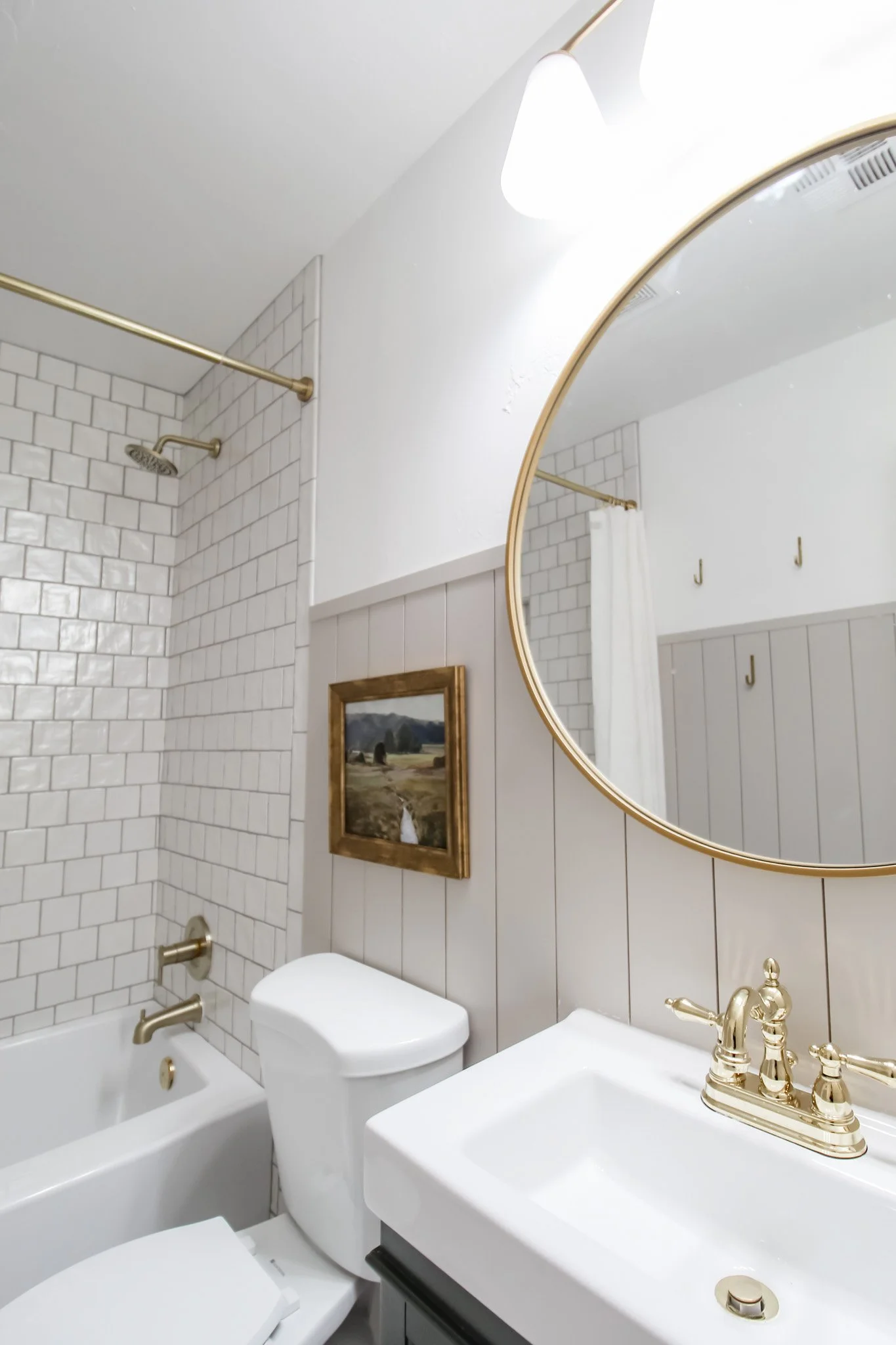
Faucets, shower trims, towel bars, and accessories should typically stay in the same finish. This creates a clean, grounded foundation and prevents visual clutter.
Once that base is established, you can introduce your second metal through:
Vanity lighting
Mirror frames
Cabinet hardware
Door hardware
For example,
Polished nickel plumbing paired with brass sconces and cabinet knobs feels elevated and timeless. The finishes don’t fight each other — they complement each other through balance and repetition.
Even in small bathrooms, mixed metals can add depth when applied intentionally.
Understanding Warm vs. Cool Metal Tones
Successful metal mixing isn’t just about color — it’s about undertone.
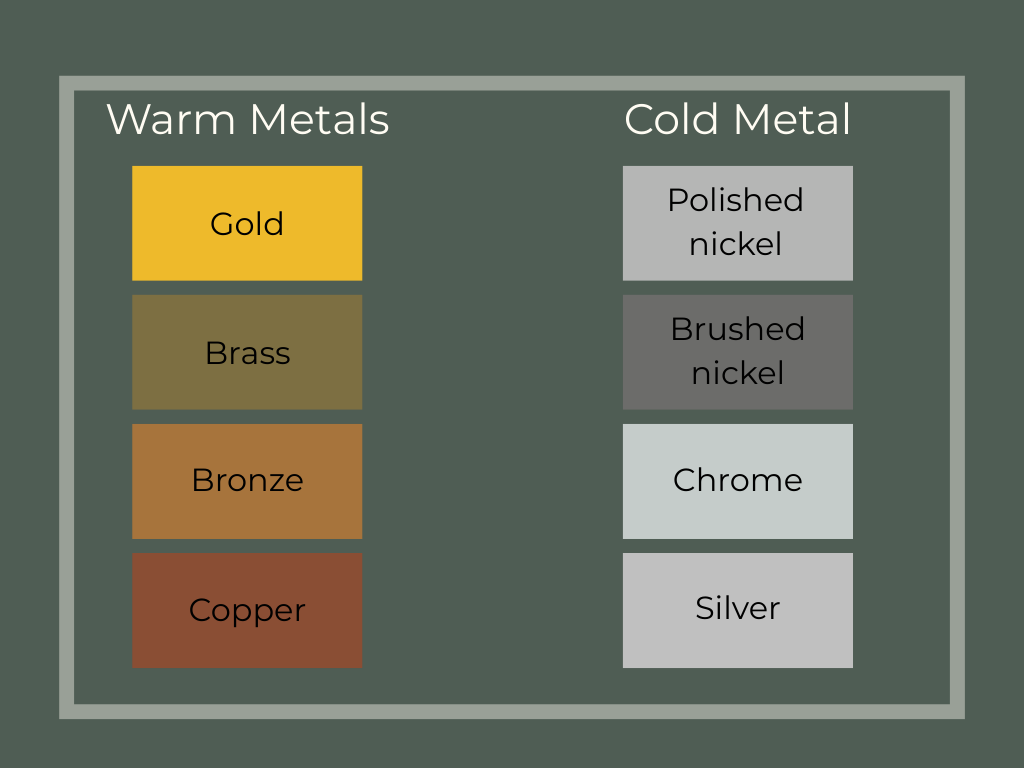
Warm Metals
Brass
Gold
Copper
Bronze
These finishes bring warmth and softness into a space and work beautifully with wood tones and natural textures.
Cool Metals
Polished nickel
Brushed nickel
Chrome
Silver
Cool metals feel crisp, clean, and refined. They pair well with stone, tile, and cooler color palettes.
The Neutral Anchor: Matte Black
Matte black is incredibly versatile. It can act as a neutral bridge between warm and cool metals, grounding the space and adding contrast without overwhelming it.
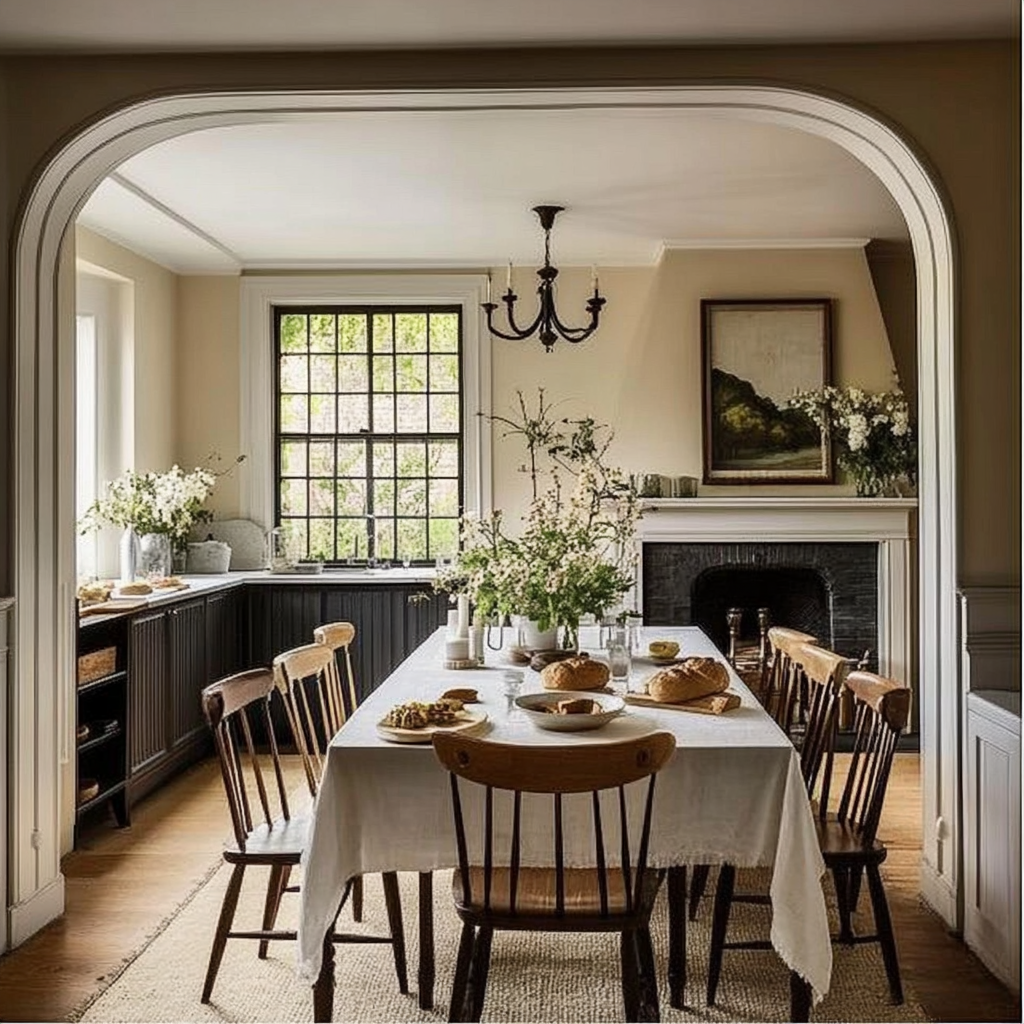
Some of our favorite combinations include:
Brass + Polished Nickel
Brass + Matte Black
Matte Black + Polished Nickel
Each pairing creates a different mood, but all feel timeless interior design principles when balanced correctly.

Texture Matters: Polished vs. Brushed vs. Matte
Beyond color, the finish texture plays a huge role in how metals interact.
Polished finishes reflect light and feel more formal.
Brushed or satin finishes are softer and more forgiving.
Matte finishes absorb light and add modern contrast.
Mixing textures can add another layer of interest. A polished nickel faucet paired with matte black hardware feels more dynamic than two equally shiny finishes competing for attention.
The Final Balance Check
Before finalizing a design, we always do a mental “sweep” of the room and ask:
Is there a clear lead metal?
Is the accent metal repeated?
Are the finishes evenly distributed?
Does the mix support the overall style of the home?
If the answer to any of those questions is no, the design likely needs refining.
The Bottom Line
Mixing metal finishes is one of the easiest ways to make a home feel layered, intentional, and timeless — but only when done with restraint.
Remember:
Focus on balance, not matching
Limit each space to two metal finishes
Establish a clear lead and a supporting accent
Repeat each finish so it feels intentional
When metals are thoughtfully selected and evenly distributed, the result is a home that feels curated rather than decorated — polished, personal, and effortlessly elevated.
If you need help mixing metal finishes in your own space, whether through a virtual design session or a full-scale remodel, we’d love to help you bring the details together.
Questions?
We’re an open book! Schedule a call or fill out the inquiry form below if you’re ready to start.
If you’re not ready, save this blog post for when you are!