Rustic & Cozy Mantels: Hearth Styling for Gatherings
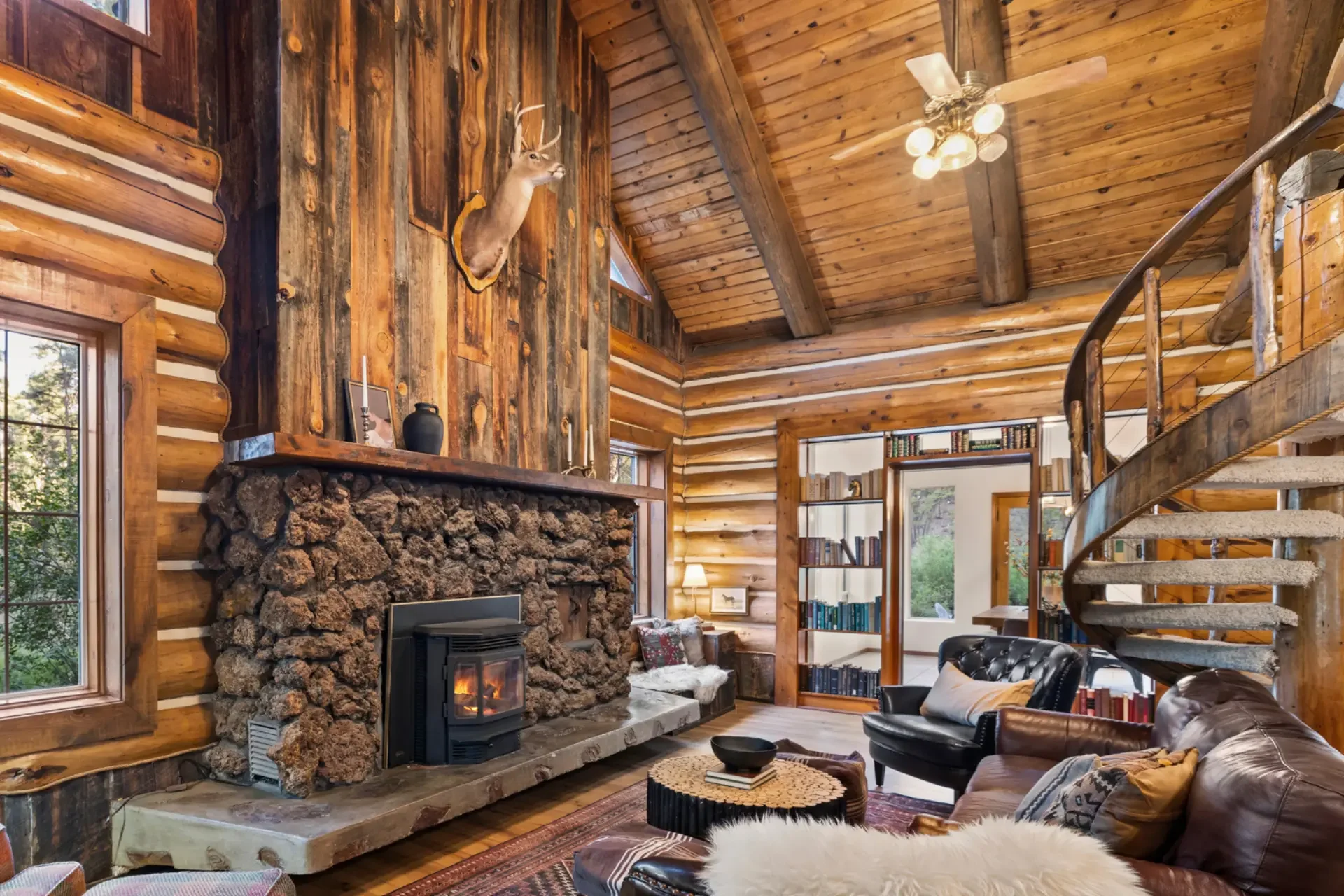
A rustic log cabin living room featuring a tall fieldstone fireplace with a wood-burning stove and a dark wood panel chimney wall. The timber mantel holds minimal decor below a mounted deer head. Exposed ceiling beams, a spiral wooden staircase, and leather seating complete the warm gathering space.
The hearth has always been where people gather. Long before open-concept plans and media walls, the fire was the room's center of gravity — where stories were told, hands were warmed and guests were welcomed in. Rustic mantel styling, done with intention, returns the fireplace to that role.
At Sentenac House, we don't style a mantel for a season's trend. We style it the way we design a home: slowly, with materials that age well and pieces that carry meaning. The result is a hearth that feels collected rather than decorated, and one that is ready the moment guests come through the door.
Here is how we approach it.
Start with the architecture, not the accessories
Before anything goes on the shelf, look at the fireplace itself. Its material, scale and surroundings decide what the mantel can hold.
Reclaimed timber or hand-hewn beams want quiet, textural companions: stoneware, linen, aged brass, dried botanicals.
Stone or plaster surrounds can carry more weight — a substantial piece of art, a heavy iron candelabra, a sculptural vessel.
A slim or floating shelf calls for restraint. Two or three considered objects will read better than a crowded line.
If the mantel itself is the weak point — too thin, too glossy, out of proportion with the firebox — no amount of styling will fix it. That is a design decision, and it is worth making once and making well.
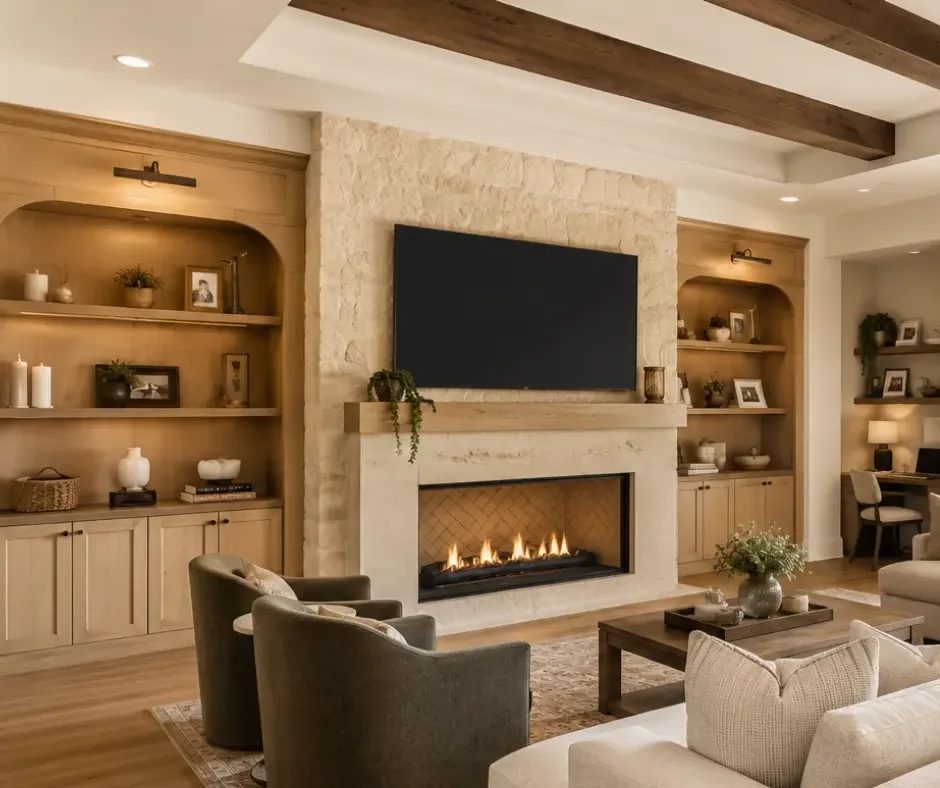
A modern rustic fireplace featuring a natural stone surround and a light wood mantel beam below a wall-mounted TV. Built-in wooden shelving flanks both sides, set in a bright, cozy living room with soft neutral seating and ceiling beams.
Anchor the composition with one meaningful piece
Every well-styled mantel has an anchor: the piece the eye lands on first. It sets the scale and tone for everything else.
Good anchors include an original painting, a large antique mirror with softened silvering, a vintage map, or a hand-carved piece with family history. Lean it rather than hanging it for a layered, lived-in feel, or hang it low so it relates to the mantel instead of floating above it.
A reliable guide: the anchor should span roughly two-thirds of the mantel's width. If hung, keep the bottom edge about 6 to 10 inches above the shelf so the two read as one composition.
Layer in three depths
Flat mantels feel staged. Cozy mantels have depth. We build ours in three layers:
Back layer: the anchor, plus one taller leaning element such as a smaller framed piece or a wooden board.
Middle layer: vessels and objects of varied height — a stoneware jug, a pair of candlesticks, a stack of old books.
Front layer: the small, tactile details guests notice up close — a brass bell, a bundle of dried wheat, a single pinecone, a handwritten place card for the evening.
Overlap each layer slightly. The goal is a composition that rewards a second look.

Choose asymmetry over perfect pairs
Symmetry is formal. Rustic warmth comes from balance without mirroring. Instead of matching items at each end, weigh a tall arrangement of branches on one side against a cluster of three candlesticks on the other.
Think in odd numbers and visual weight. A heavy dark vessel balances a lighter, taller spray of greenery. Step back often; balance is judged from across the room, where your guests will first see it.
Build a warm, natural material palette
The coziness of a rustic mantel lives in its textures. Keep the palette warm and grounded:
Wood: reclaimed, oiled or unfinished, never high-gloss
Stone and clay: hand-thrown stoneware, terracotta, travertine
Metal: aged brass, hand-forged iron, unlacquered copper
Fiber: linen, wool, jute, woven baskets
Botanicals: olive and eucalyptus branches, dried grasses, magnolia leaves, pine
Limit the palette to two or three tones — warm whites, ochre and deep green, for example — and let texture do the rest.
Light it like a gathering
Nothing makes a hearth feel more inviting than layered, low light. Group taper candles at varied heights, tuck a few votives into the front layer, and add warm-white string lights within a garland for evening glow.
For gatherings, we favor real beeswax tapers in brass holders for the table-to-mantel connection. Where open flame isn't practical, quality flameless candles are a reasonable stand-in.
Keep candles and greenery well clear of the firebox opening, and never leave open flame unattended.
Style for the season without starting over
A mantel built on lasting pieces only needs light seasonal edits. Keep the anchor and the core vessels year-round, and change the front layer and botanicals.
Autumn: dried wheat, magnolia leaves, heirloom squash, amber glass
Holidays: fresh cedar or pine garland, brass bells, taper candles, stockings on heavy iron hooks
Late winter: bare branches, beeswax, simple wool textures
This is how a hearth becomes part of a family's rhythm, rather than a project to redo every year.

Make room for the story
The most memorable mantels hold something personal. A grandmother's candlesticks. A photograph in a worn frame. A piece brought home from travel. These are the objects guests ask about, and the ones that turn a styled shelf into a family's hearth.
We encourage every client to edit, not accumulate. Choose one or two meaningful pieces and give them room to be seen.
Our approach to the hearth
A mantel is small, but it tells the truth about a home. When the fireplace is designed well and styled with care, it becomes the place a gathering naturally begins — and the place people linger long after dinner.
If you are building or reimagining a home and want a hearth made to be handed down, we would love to hear about it. Begin your inquiry with Sentenac House.
Frequently asked questions
What should I put on a rustic mantel? Start with one anchor piece, such as art or a mirror, then layer vessels, candlesticks, natural greenery and one or two personal objects. Favor wood, stone, iron, brass and linen over glossy finishes.
How do I make my mantel feel cozy? Layer in three depths, use warm natural textures, and add low, layered light from candles or warm-white string lights.
How high should art hang above a fireplace mantel? A common guide is 6 to 10 inches above the shelf, with the piece spanning about two-thirds of the mantel's width.
Should mantel decor be symmetrical? Not necessarily. Asymmetrical balance, using visual weight and odd-numbered groupings, feels more relaxed and suits rustic styling.
How do I style a mantel for the holidays? Keep year-round anchor pieces and swap the front layer: fresh garland, brass bells, taper candles and stockings on sturdy hooks.
Questions?
We’re an open book! Schedule a call or fill out the inquiry form below if you’re ready to start.
If you’re not ready, save this blog post for when you are!