A historic bungalow given a renovation that respects its age.
The wrong way to renovate a historic home is to flatten it. Strip out the original details, install gray luxury vinyl plank, add recessed LED strips, call it modern. The house loses its character. The neighborhood loses a piece of its story. And in five years, the renovation looks dated anyway.
The right way is to listen. Preserve what's worth preserving — the proportions, the scale, the way light moves through the rooms. Add only what earns its place. That's the brief here: honor the bungalow's bones while upgrading the bathroom and living room for how a family actually lives today.
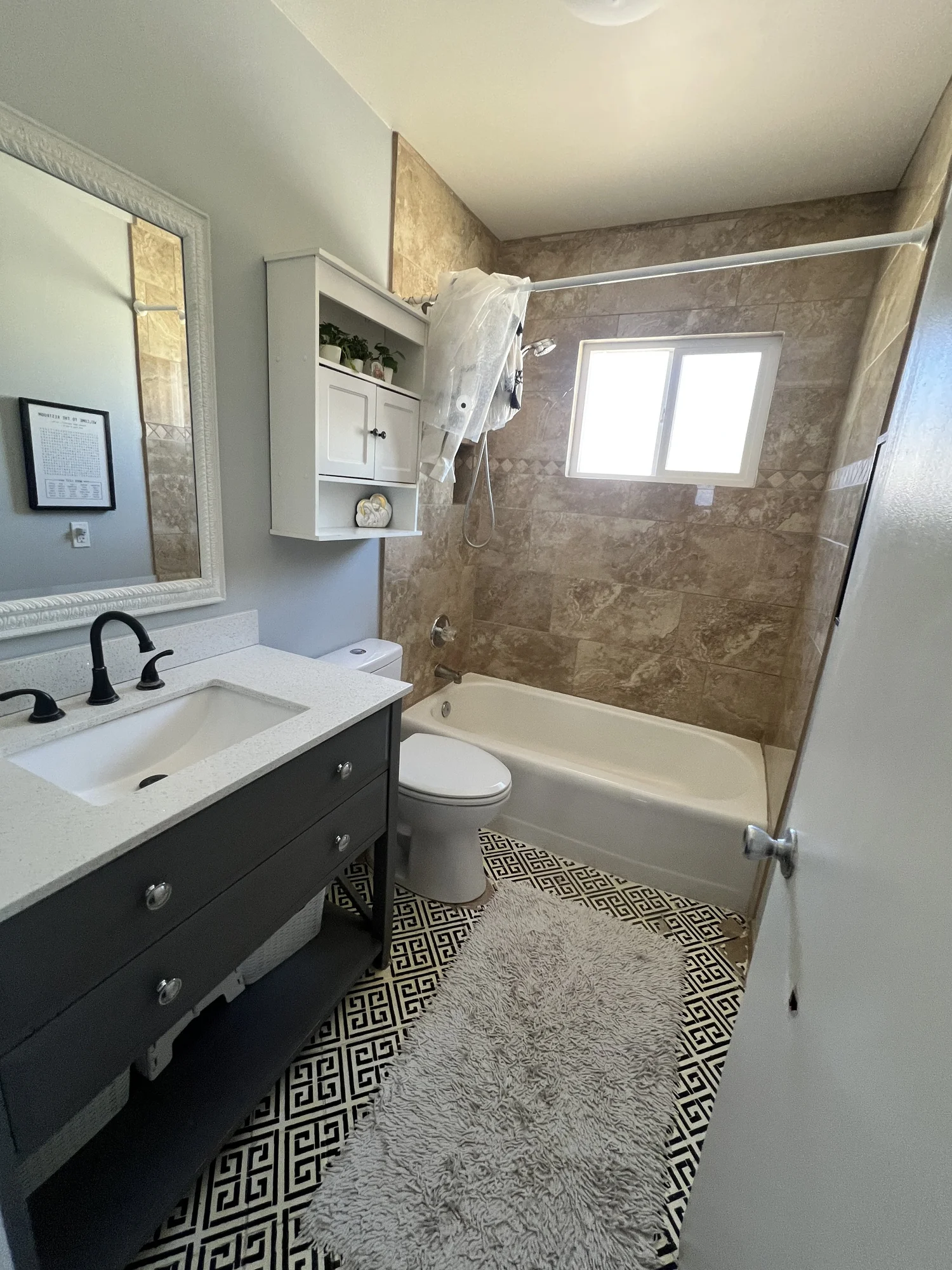
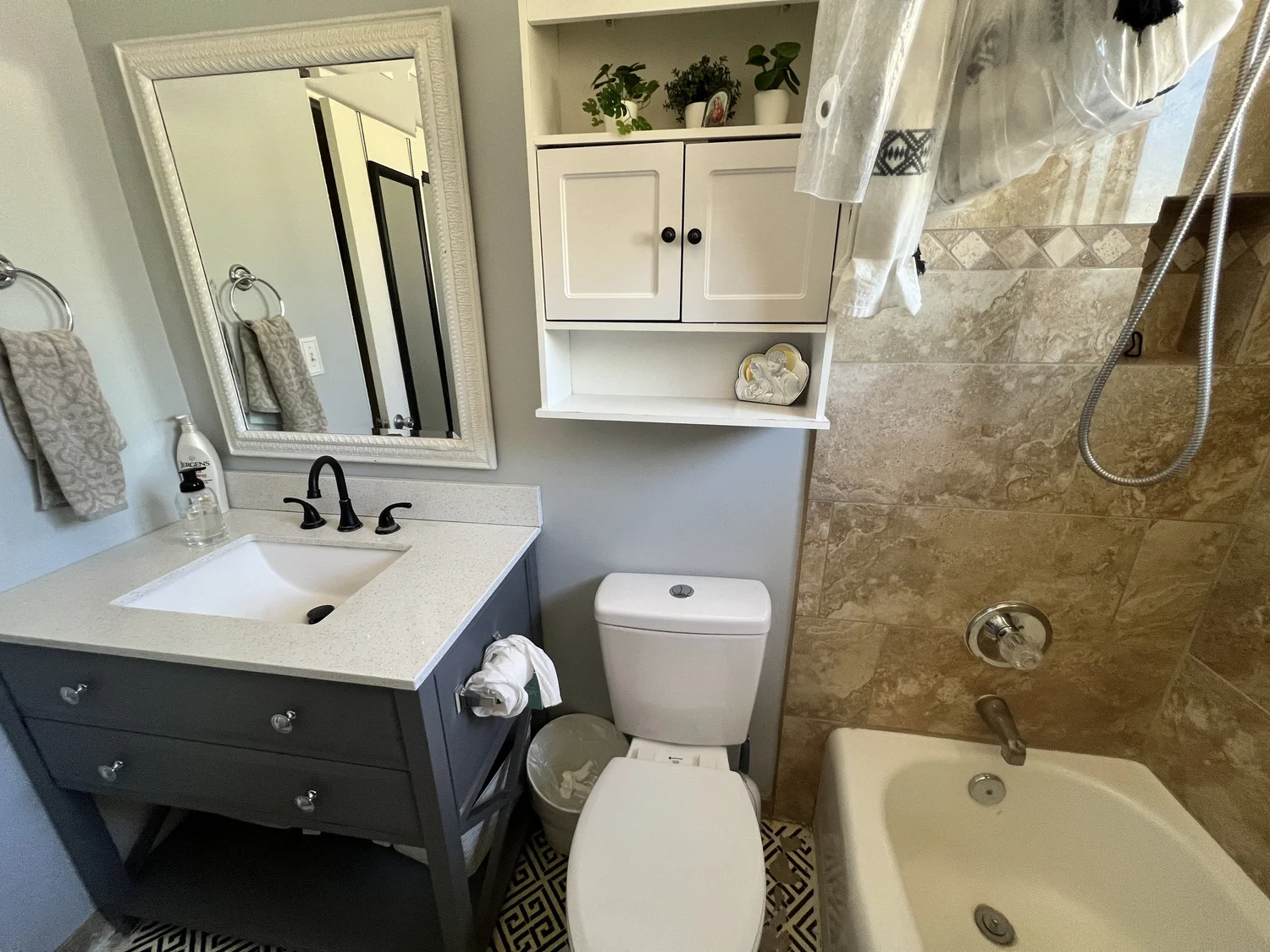
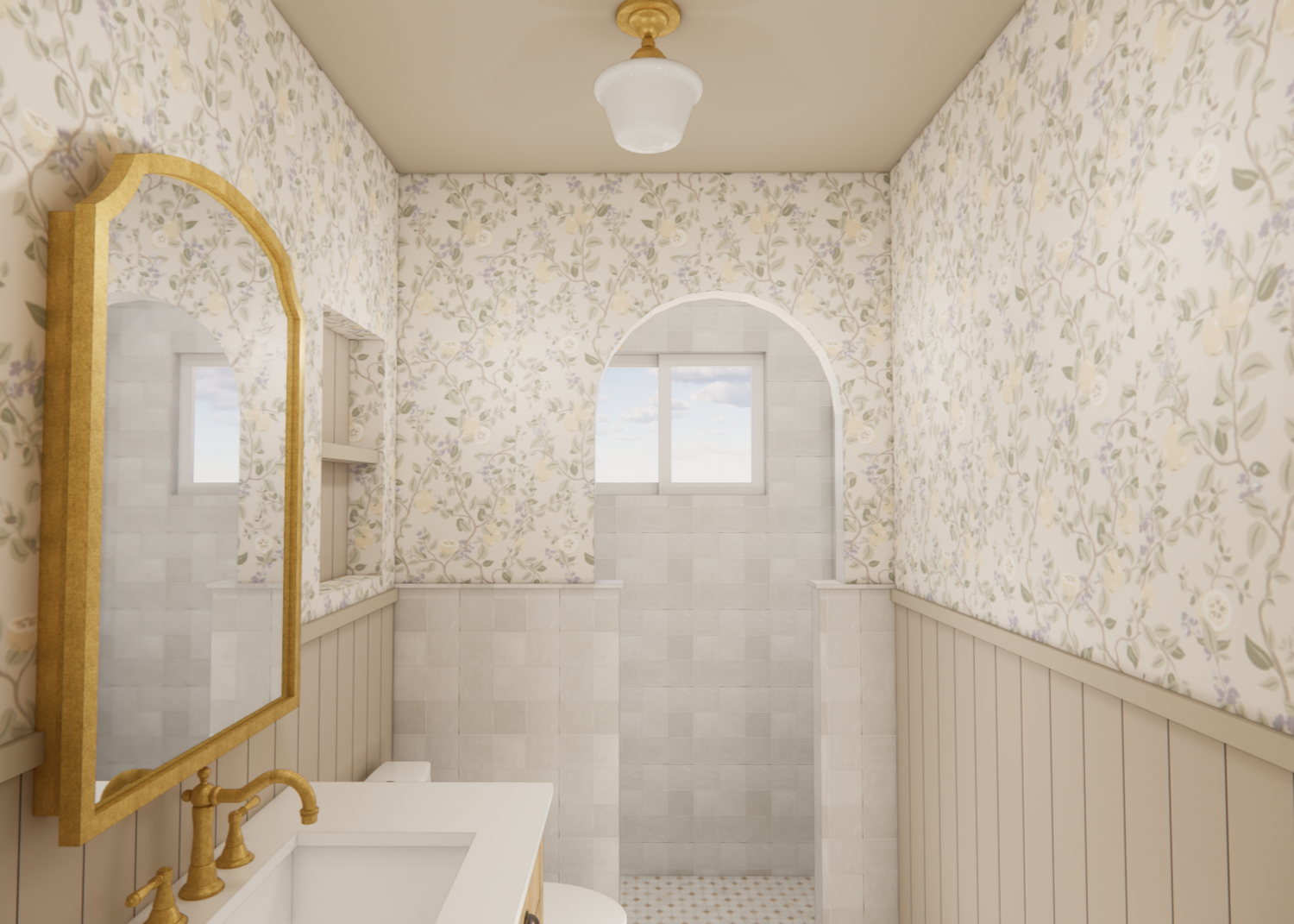
The bathroom got the most transformation. A sculptural arched shower entry — framed in 4×4 zellige tile — that echoes the bungalow's original architecture without mimicking it. Botanical wallpaper layered above tongue-and-groove paneling for texture and softness. Warm brass plumbing because it was always going to age better than chrome. A period-correct mosaic floor. Built-in niches carved into the walls because storage should look integrated, not added.
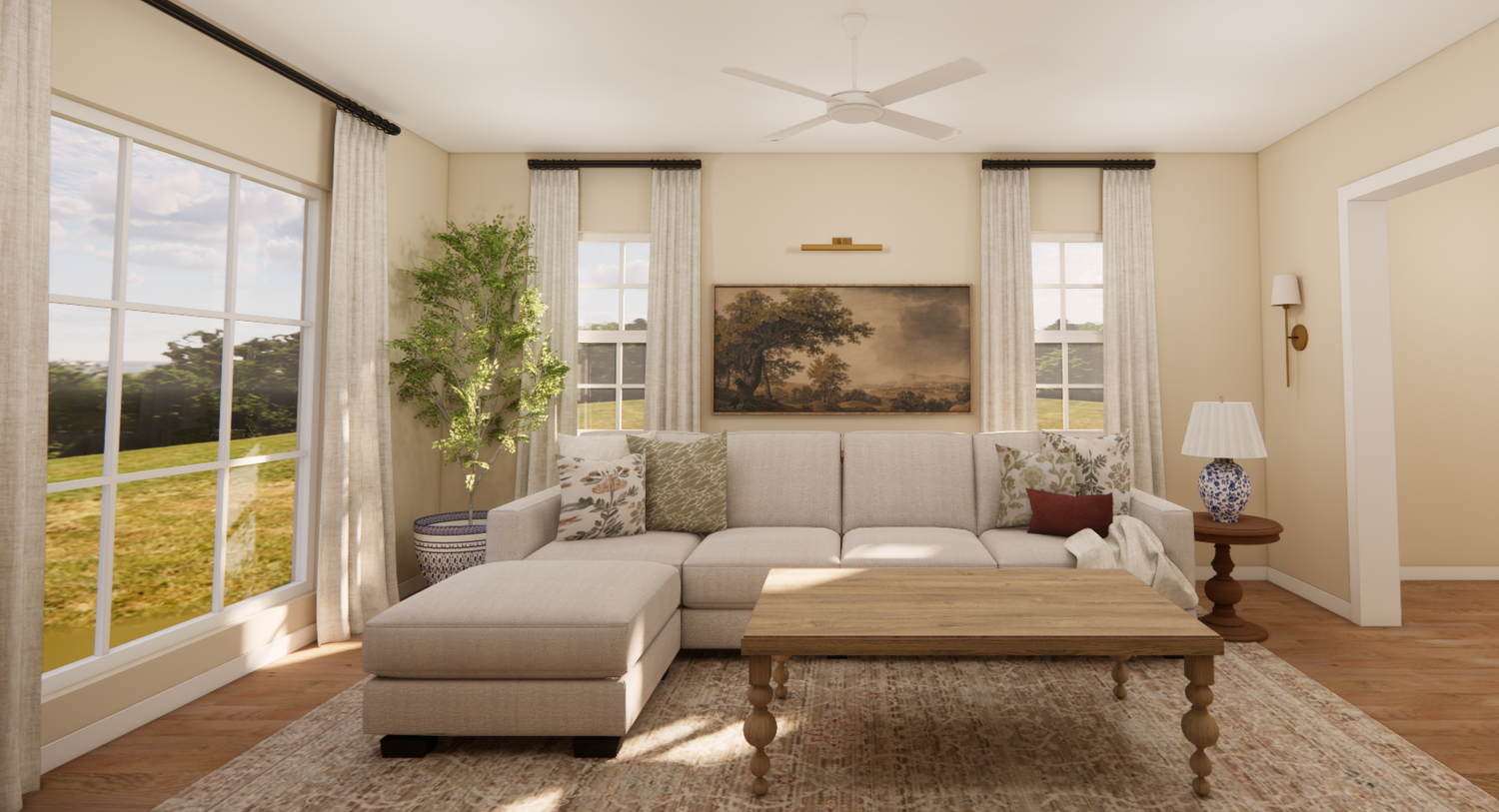
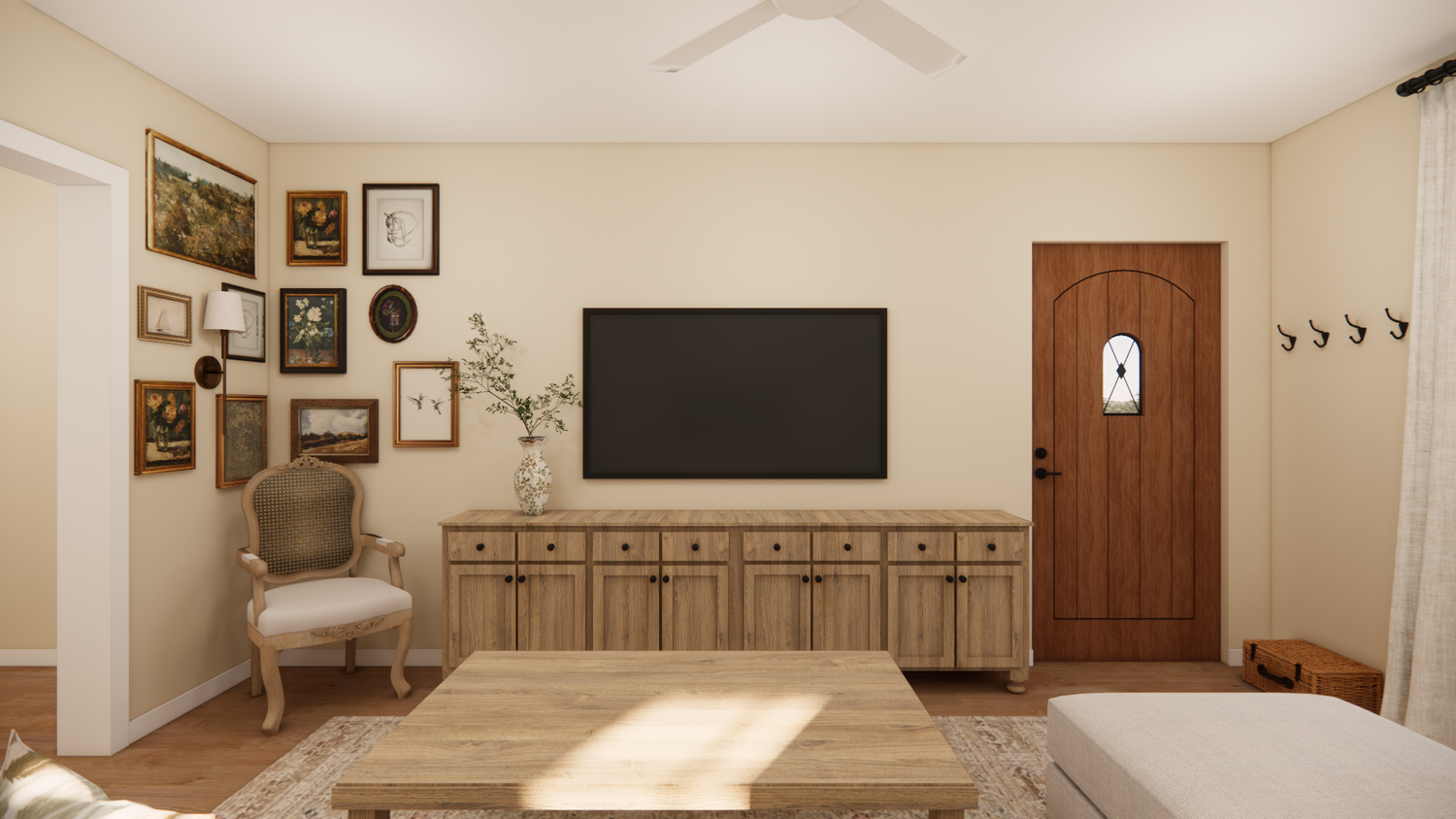
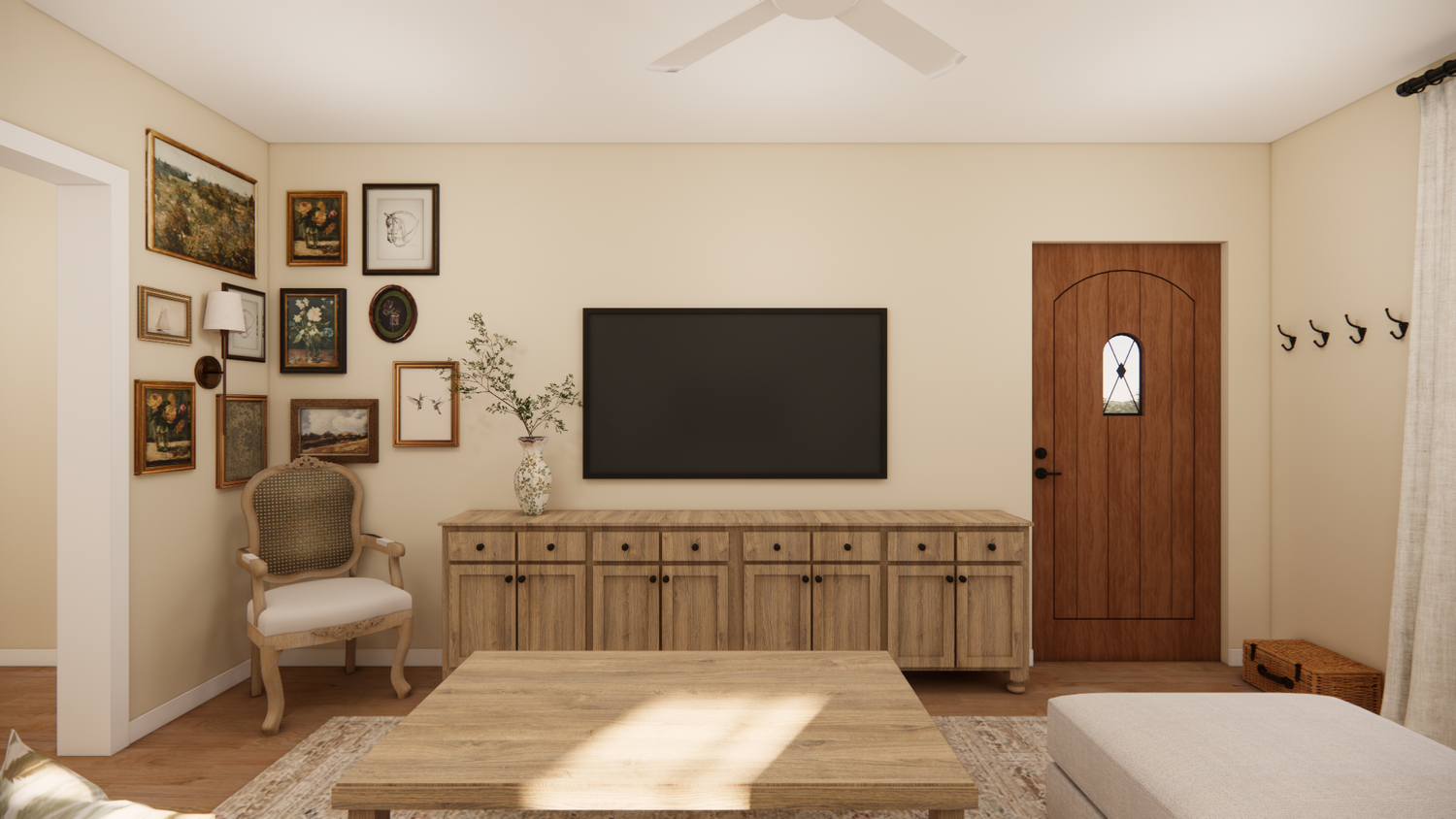
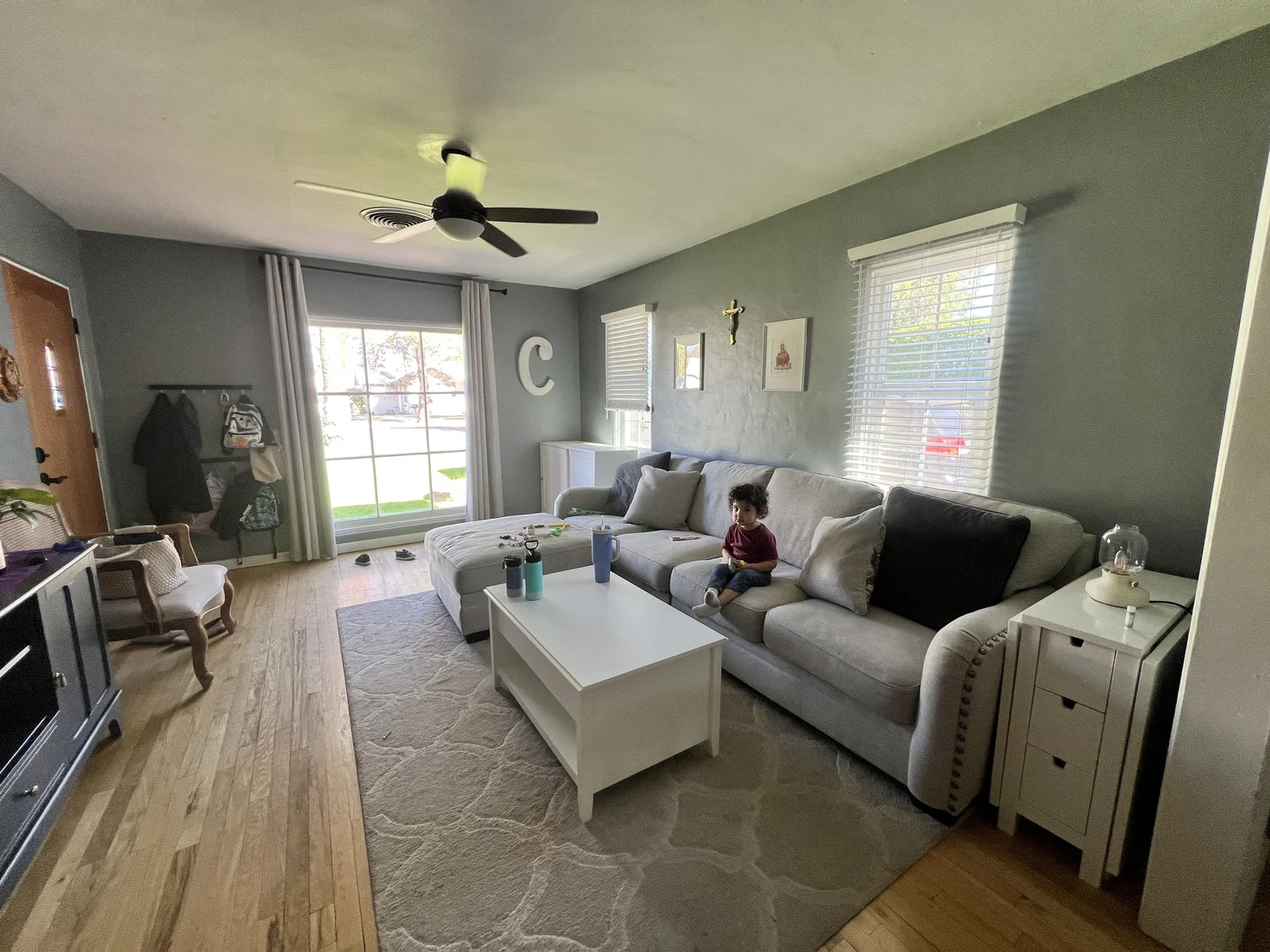
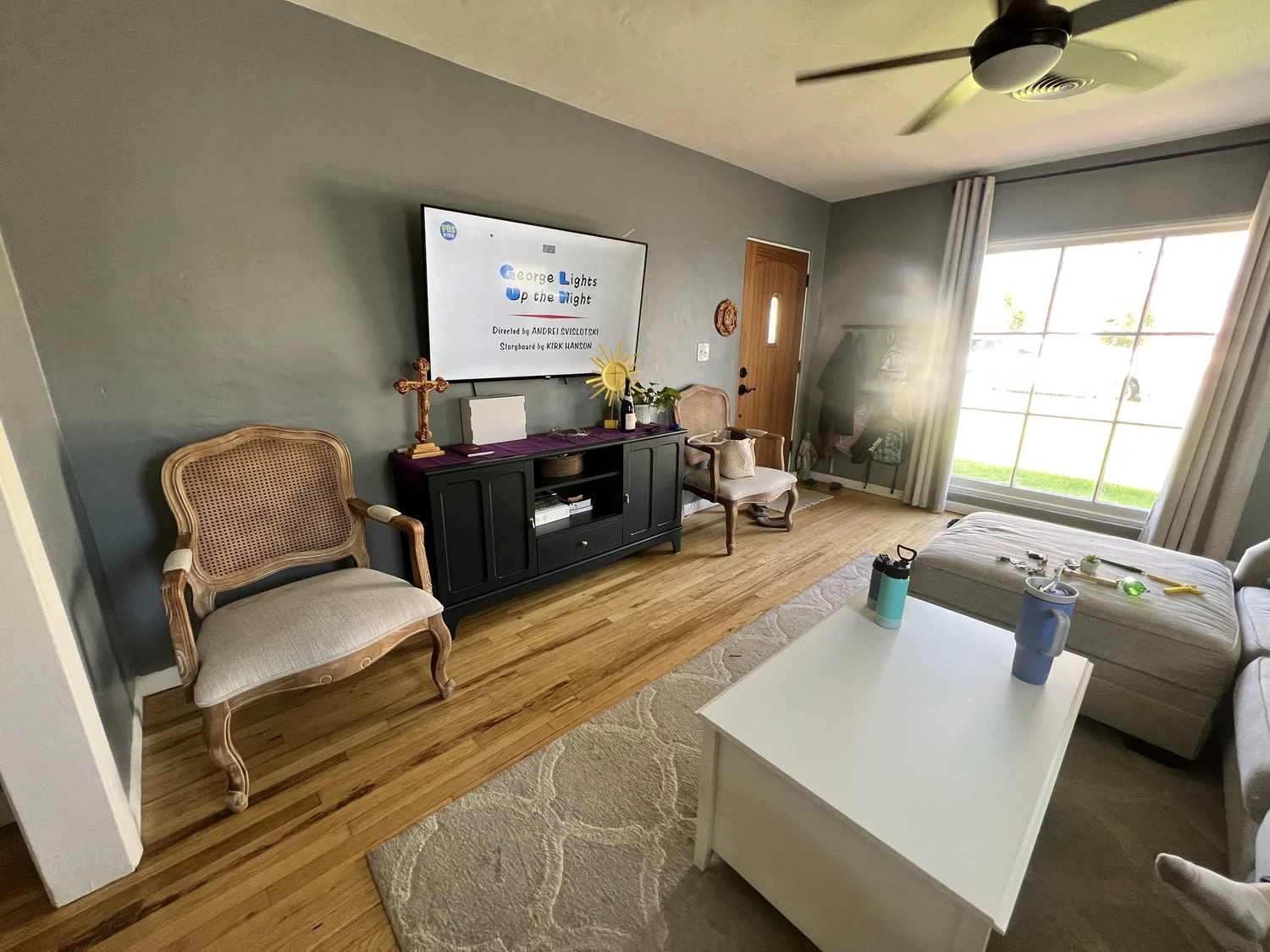
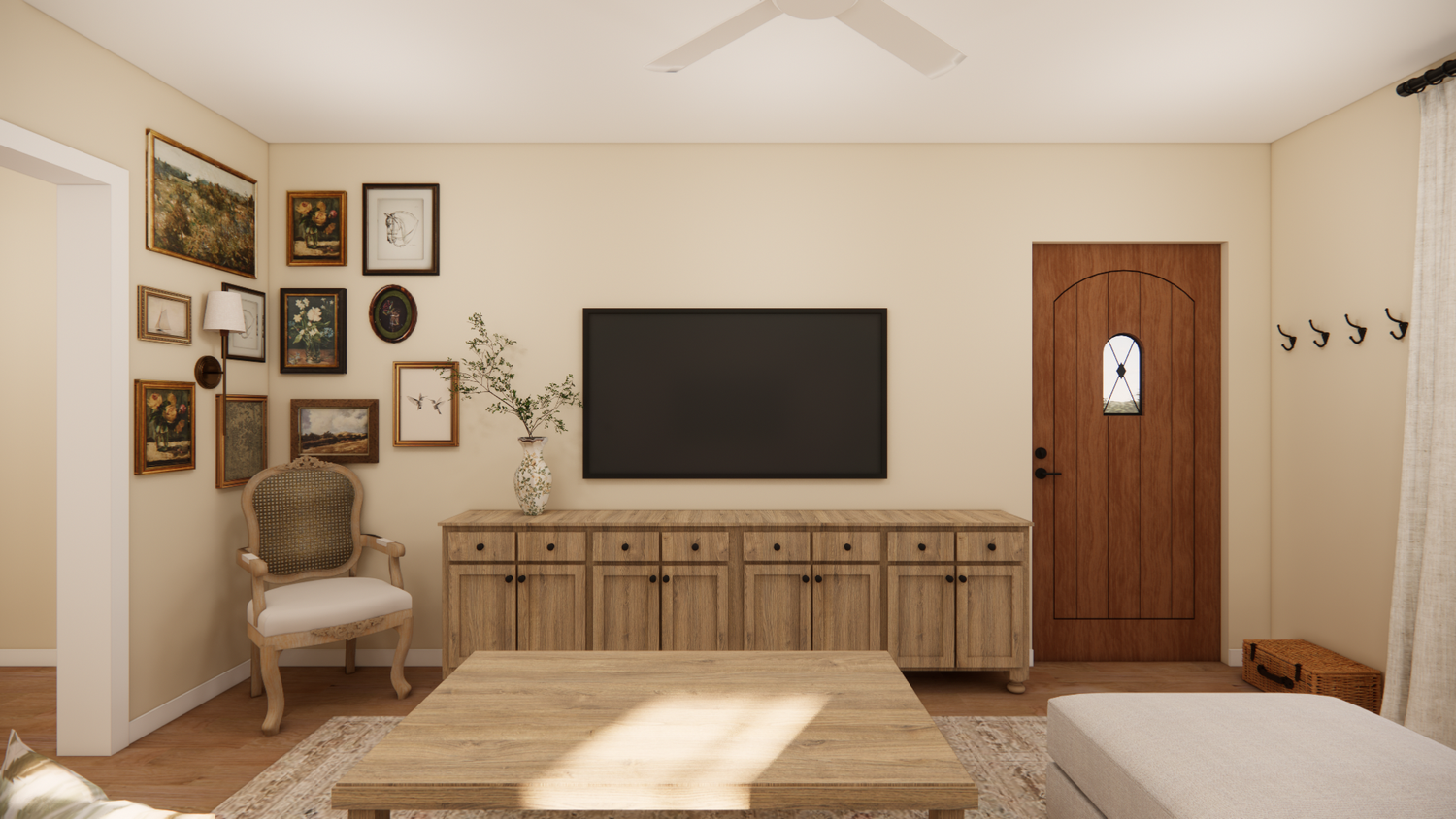
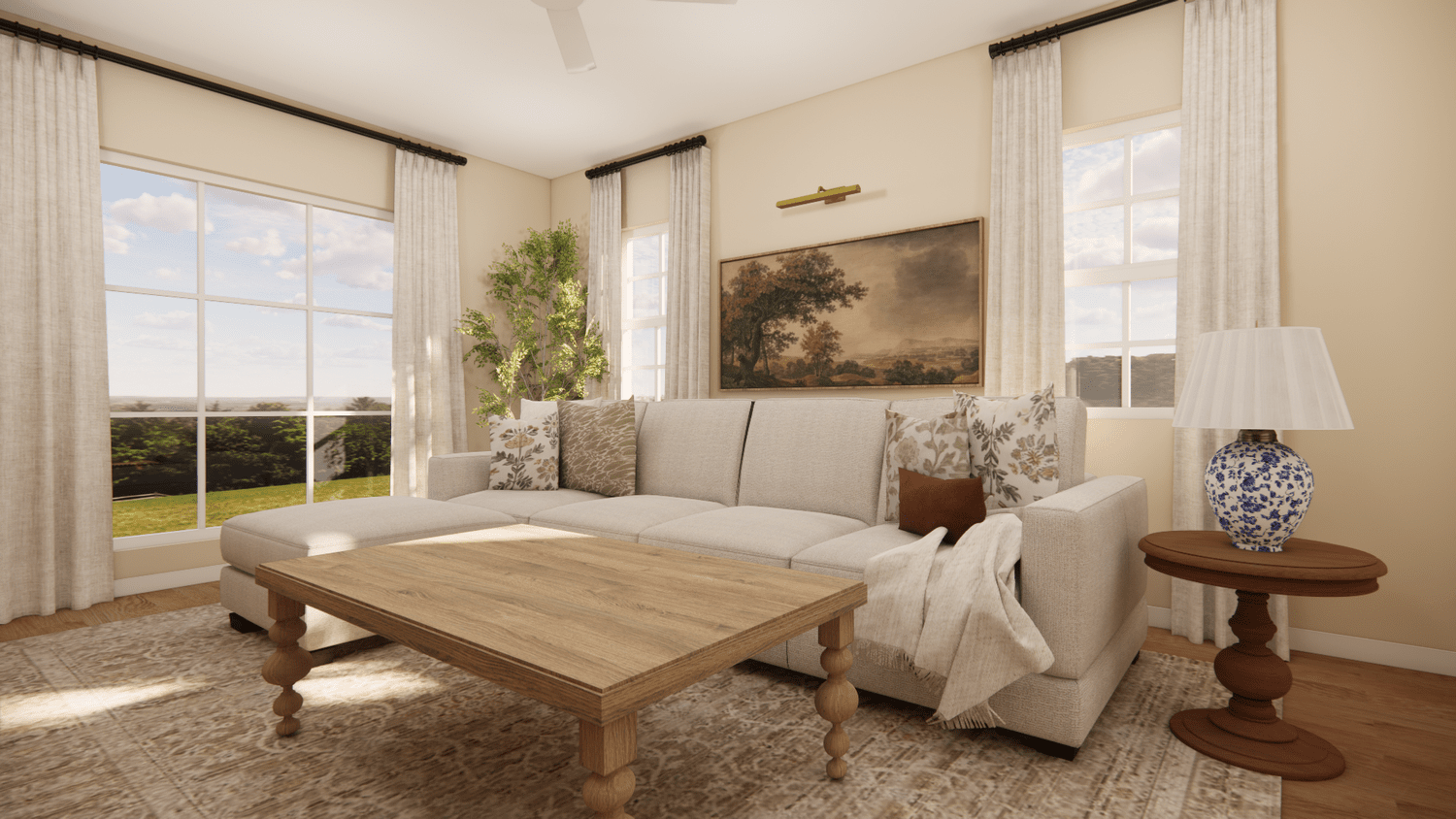
The living room reset to softness. Warm woods. Heavy canvas and linen. Gentle feminine pattern work. Low-contrast color layering so the room feels held rather than performed. The two spaces speak the same language without ever using the same words.
"Renovation as restoration. Not erasure."— The Sentenac House Standard






What made this Junior Studio —
not just a bathroom and living room refresh.
The Sculptural Arched Shower
Most renovations would have framed the shower with a standard rectangular opening. We built a sculptural arched entry — framed in 4×4 zellige tile — that echoes the bungalow's original architecture without copying it. That arch is the gesture that makes the bathroom feel like it belongs to the house's era, not ours.
Material Layering, Not Feature Stacking
The bathroom isn't "spa-like" or "luxurious" — it's layered. Botanical wallpaper above tongue-and-groove paneling. Zellige tile meeting mosaic flooring. Warm brass against white oak. Each material plays a role. None of them shout. That restraint — knowing when to stop adding — is what makes it feel considered instead of decorated.
Warm Brass That Ages Gracefully
We chose warm brass plumbing fixtures instead of chrome or matte black because brass was the right choice in 1920 and it's still the right choice now. It ages. It patinas. It doesn't look dated when trends shift. That's the test: will this material still feel right in twenty years? Brass passes. Chrome doesn't.
Built-In Storage, Not Add-Ons
The bathroom has built-in wall niches carved into the framing — not floating shelves bolted on after the fact. Storage that looks integrated, not added. That level of forethought during construction is what separates renovation from redecoration. We designed the bones, not just the surfaces.
The Living Room's Soft Reset
The living room didn't need drama — it needed softness. Warm woods. Heavy canvas and linen. Gentle feminine patterns. Low-contrast color layering that lets the room feel calm instead of styled. The bathroom is the moment. The living room is the exhale. That balance across two rooms is Junior Studio territory.
Renovation as Restoration
The entire project's philosophy: preserve what's worth preserving, add only what earns its place. We didn't flatten the bungalow's character to make room for ours. We listened to the house first, then designed around it. That reverence for the architecture — that refusal to erase history — is what makes this renovation feel like it belongs.
Why Historic Renovations Require Restraint
Most people approach a historic home renovation wanting to "update" it — which usually means stripping out anything old and replacing it with whatever's trending. Gray floors. White walls. Recessed lights. Open concept if possible. The result: a house that looks like every other renovation on the block, plus a neighborhood that just lost a piece of its architectural story.
The better approach: listen first. What does this house want to be? What proportions matter? What scale feels right? Where does the light come from and where does it go? A bungalow has different bones than a ranch. A Craftsman has different logic than a Colonial. You can't flatten all of that and expect the house to still feel like itself.
This bathroom renovation honored the bungalow's scale and character. The arched shower entry echoes the curves and softness of early 20th-century architecture. The zellige tile nods to handcrafted materials without being literal about it. The brass fixtures age the way original fixtures would have aged. None of it screams "vintage" or "period correct" — it just fits.
The Two-Room Junior Studio Strategy
This project scope — bathroom plus living room — is classic Junior Studio territory. Not a whole-home Signature transformation. Not a single-powder-room moment. Two rooms, thoughtfully connected, that shift the feel of the entire house even though most of it wasn't touched.
The bathroom got the renovation budget: framing, tile, millwork, fixtures, built-ins. The living room got the styling budget: textiles, paint, furnishings, layered softness. Together, they demonstrate what a well-scoped Junior Studio project can do: make a meaningful impact without requiring a whole-home timeline or budget.
That's the Junior Studio advantage. We can transform the spaces that matter most — the bathroom where you start your day, the living room where you spend your evenings — without asking you to move out for six months while we gut the kitchen too. Focused scope. High detail. Real impact.
Why Material Choices Matter More Than Trends
The materials in this bathroom — zellige tile, brass fixtures, botanical wallpaper, tongue-and-groove paneling, mosaic flooring — weren't chosen because they're trendy. They were chosen because they last. Not just physically (though zellige and brass will outlive most modern tile and chrome), but aesthetically. These materials don't date themselves.
Zellige has been made the same way for centuries. Brass has been finishing plumbing fixtures since indoor plumbing existed. Botanical wallpaper has cycled in and out of fashion for a hundred years but never looks wrong. Tongue-and-groove paneling is period-appropriate for a bungalow built in the 1920s.
That's the test we apply to every material: will this still feel right in twenty years, or will it look like a 2024 renovation? If it's the latter, we don't use it. This bathroom will age gracefully — which is exactly what a historic home renovation should do.
Ready to renovate with reverence
for your home's history?
Junior Studio projects like this honor the architecture while upgrading for modern life. Two-room scope, high detail, focused transformation.