A new construction shell we are slowly turning into a piece of the desert.
This is the hardest brief in residential design: make a brand-new house feel like it's stood here for generations. Not fake age. Not distressed finishes performing history. Real materials that carry their own stories, assembled with enough patience that the house earns its place in the landscape instead of imposing on it.
The architecture arrived modern and clean — good bones, zero soul. White drywall. Builder-grade fixtures. That generic new-construction smell. Our brief was to layer in age, story, and craftsmanship until the house felt like it had stood where it stands for fifty years. Every distinctive element in this home was hunted, not ordered.
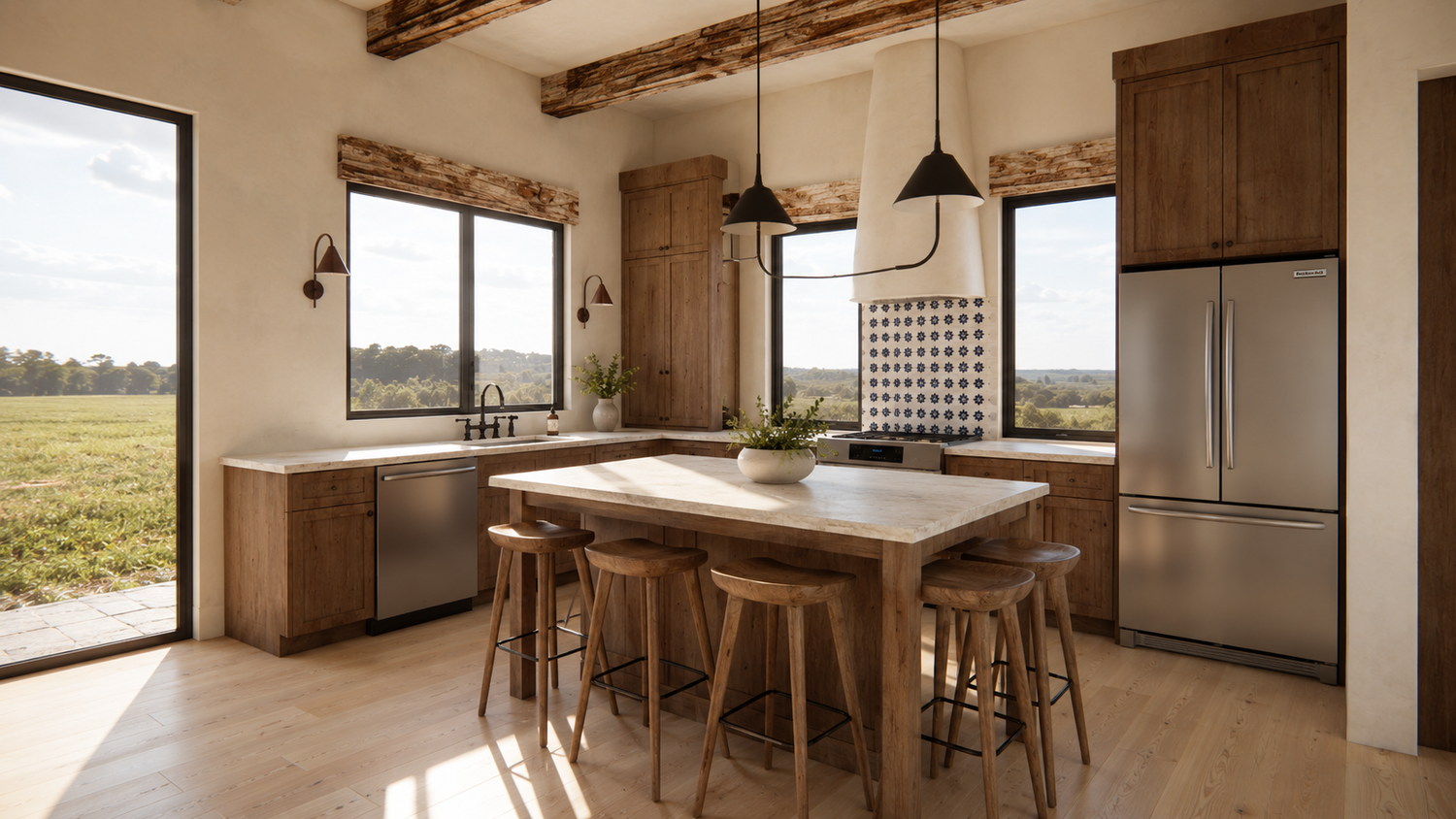
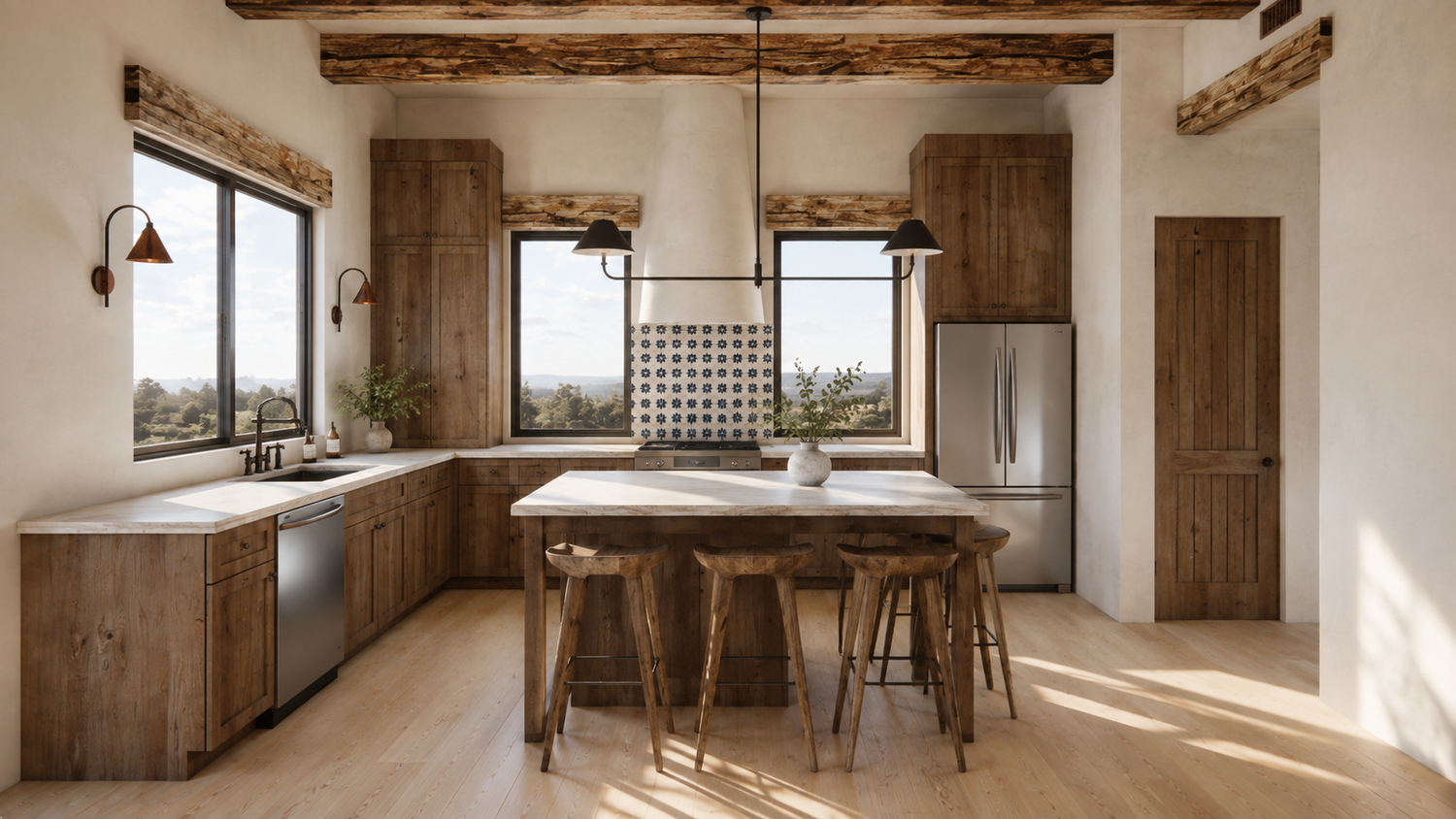
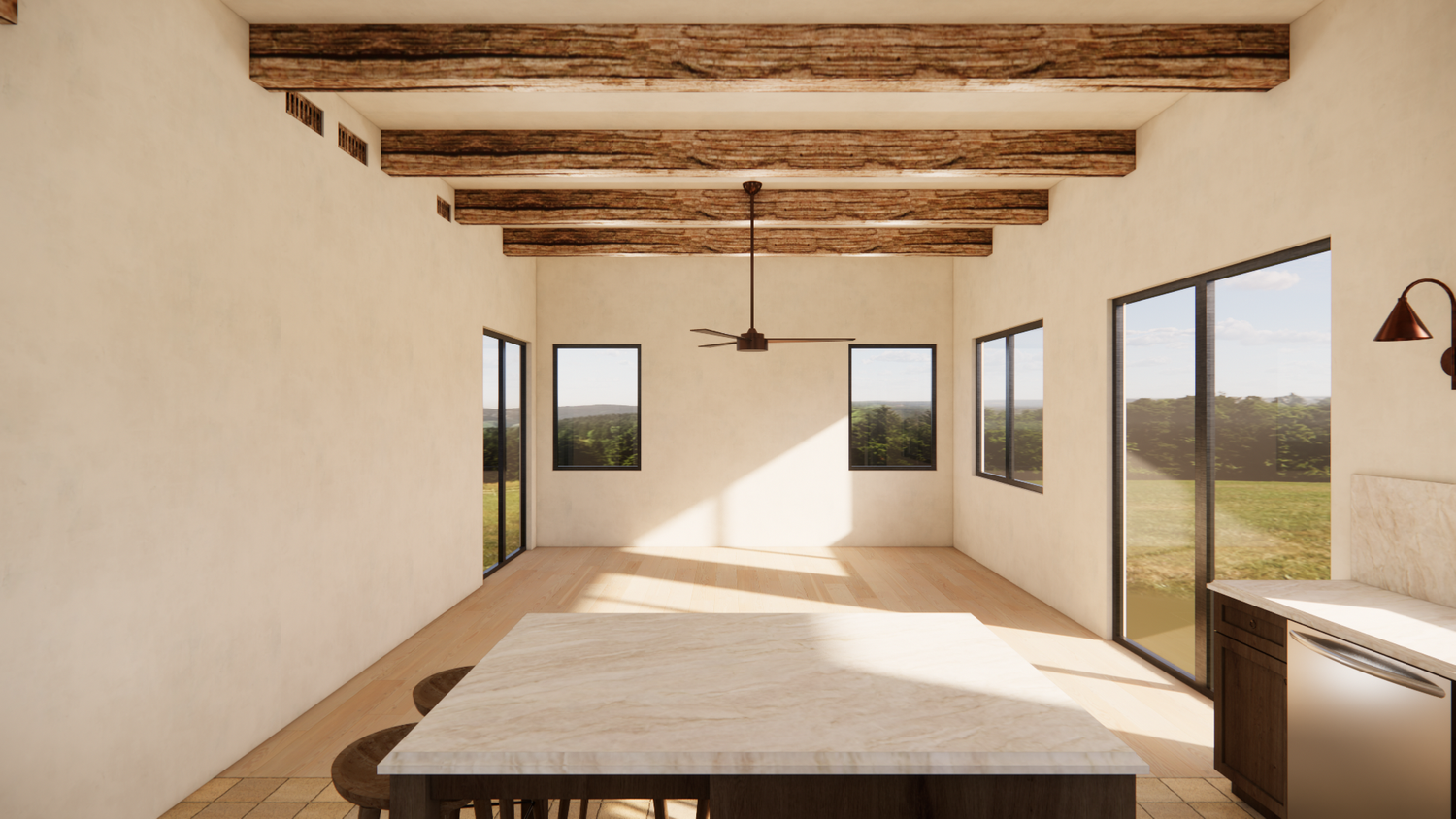
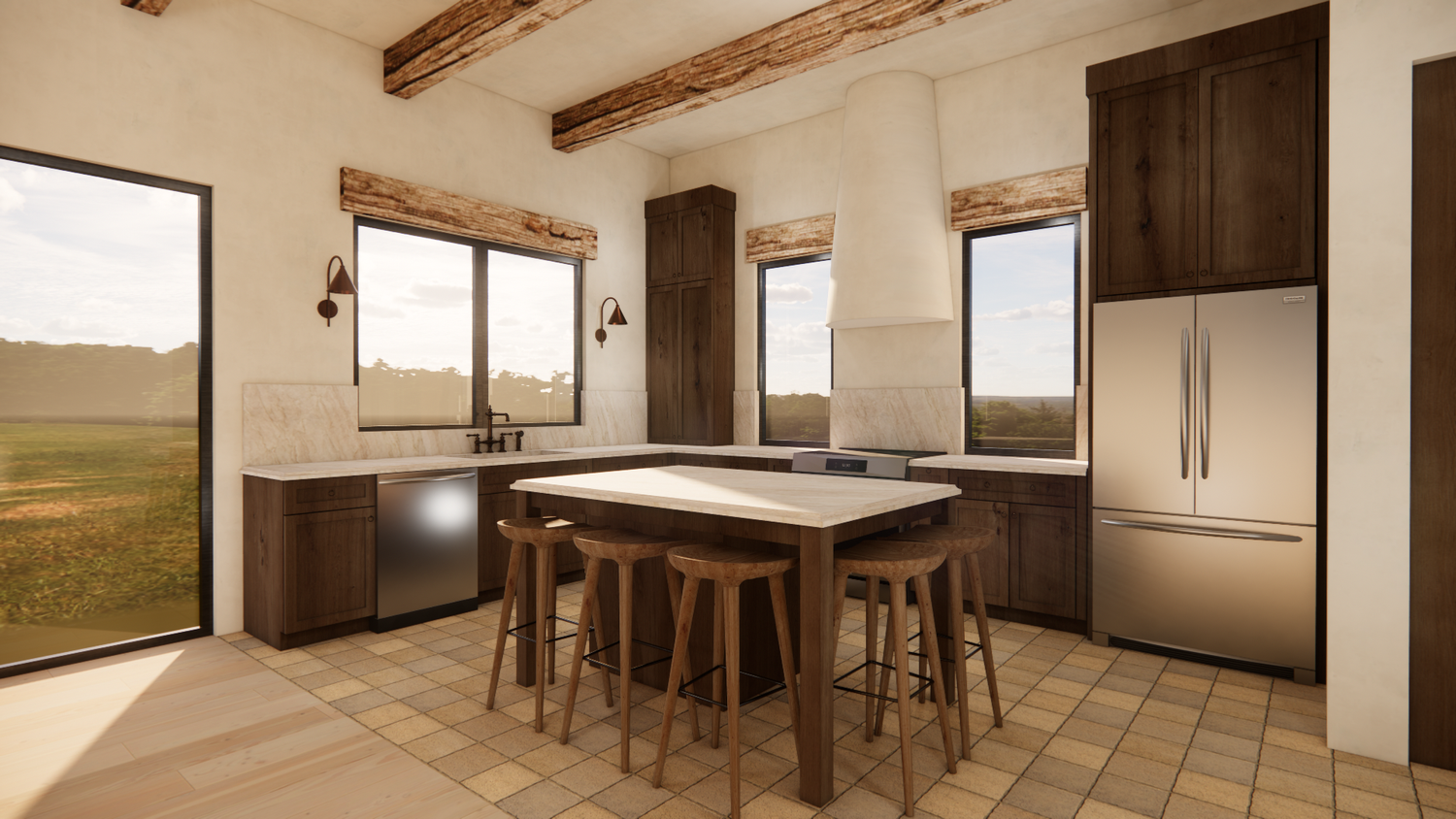
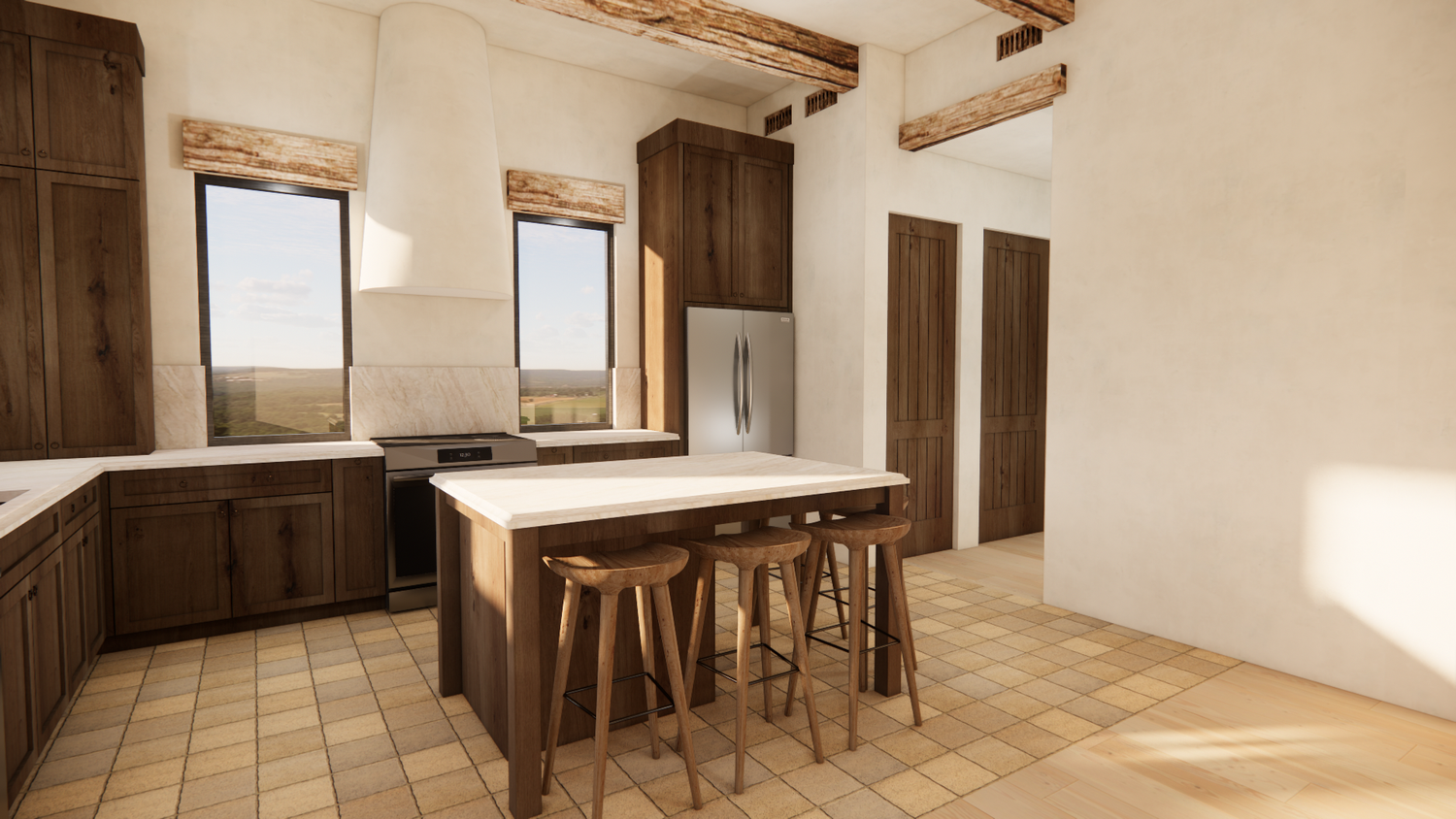
Start with the bones. Reclaimed timber ceiling beams — not new wood stained to look old, but actual aged timbers sourced for their weathering and character. Terracotta plaster walls that took weeks to get right — multiple coats, hand-troweled texture, the kind of finish that catches light differently all day. Bronze iron hardware pulled and forged by hand. The kind of palette you can't buy from a catalog because no catalog can hold this much story.
The kitchen carries rich wood cabinetry under exposed timber headers and gathers around a central island built for the family to actually cook together. The living room rests on those reclaimed beams and textured plaster, with windows scaled to the desert horizon — not generic sliders, but frames that ask the landscape inside.
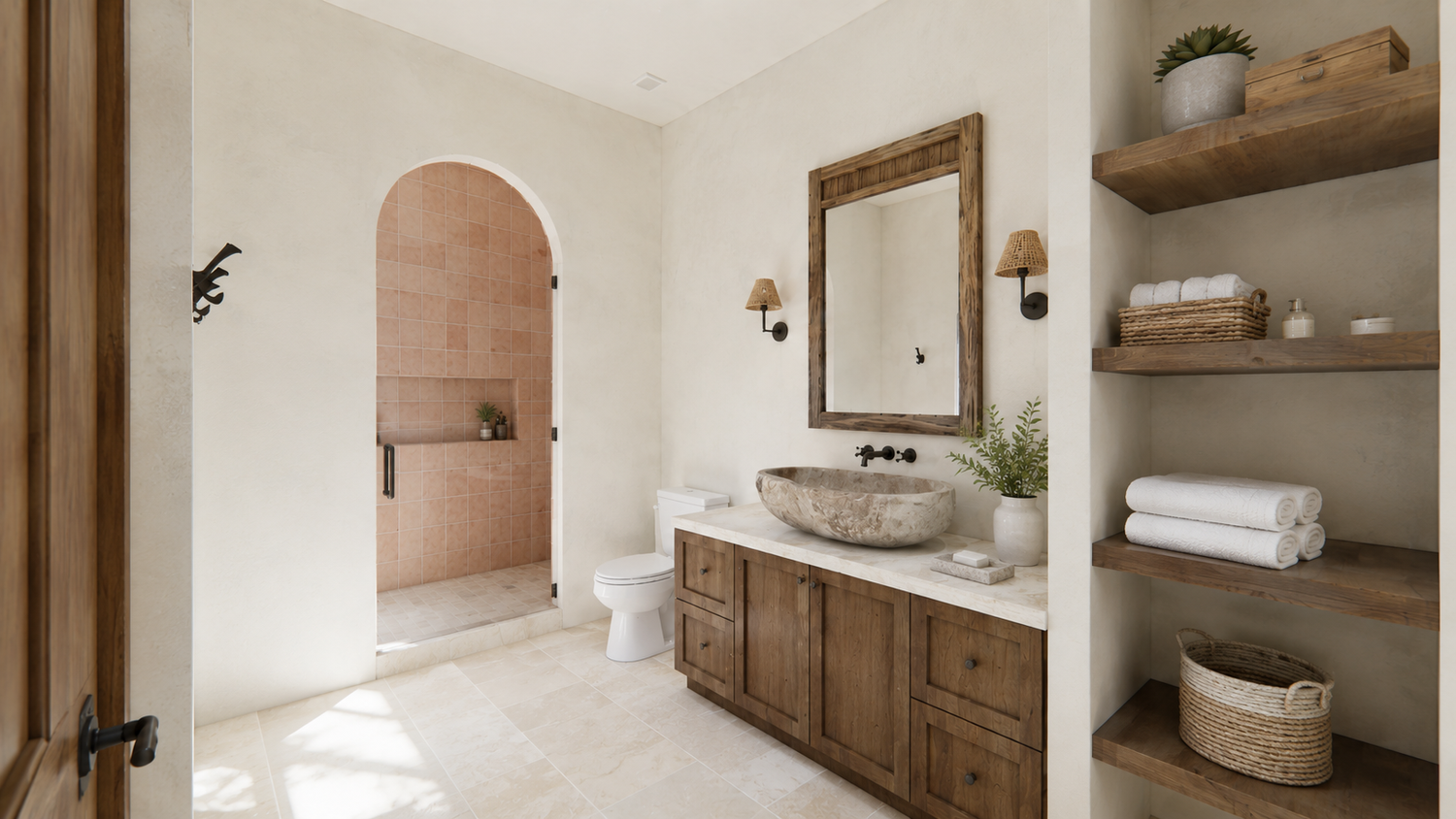
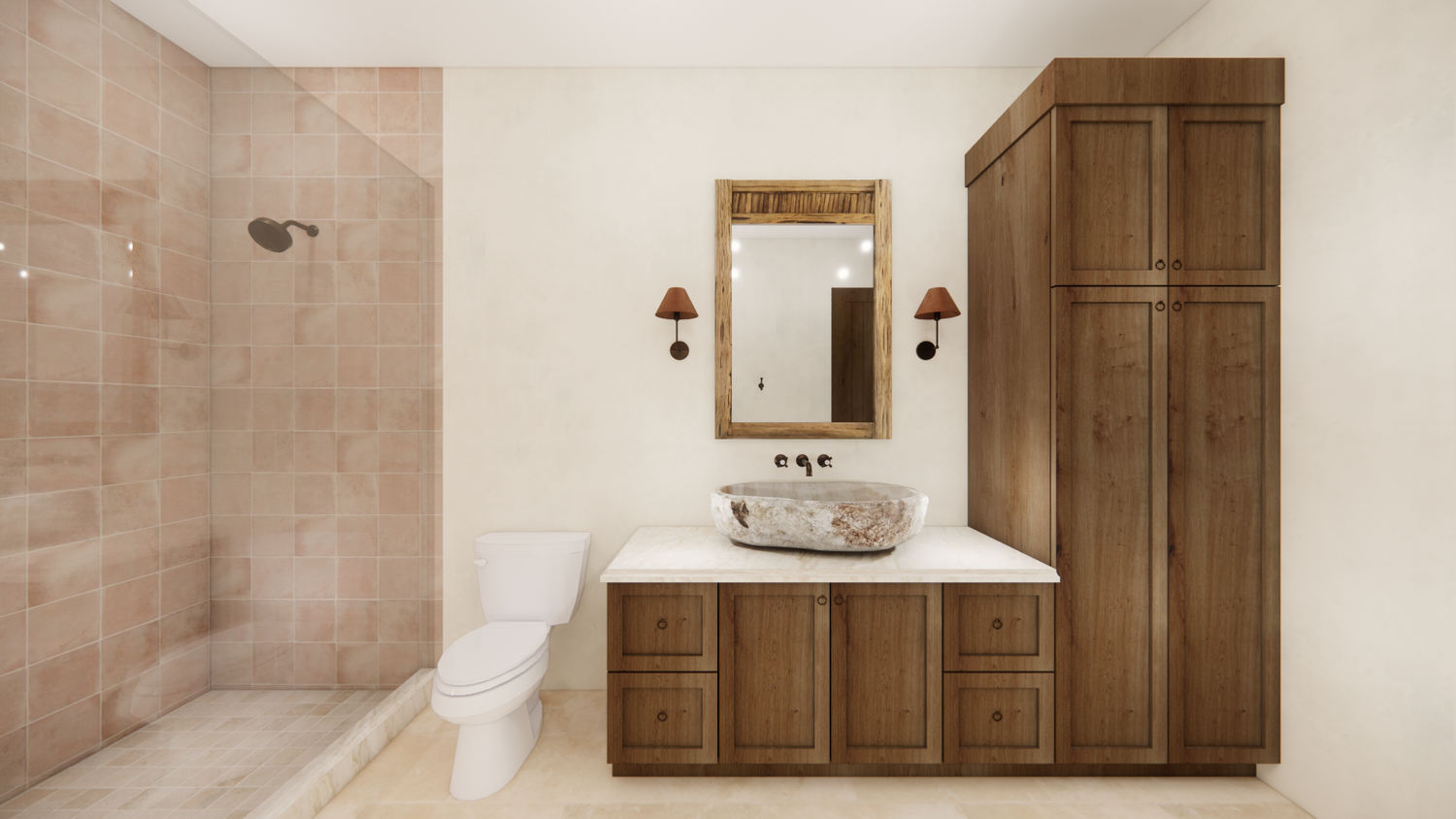
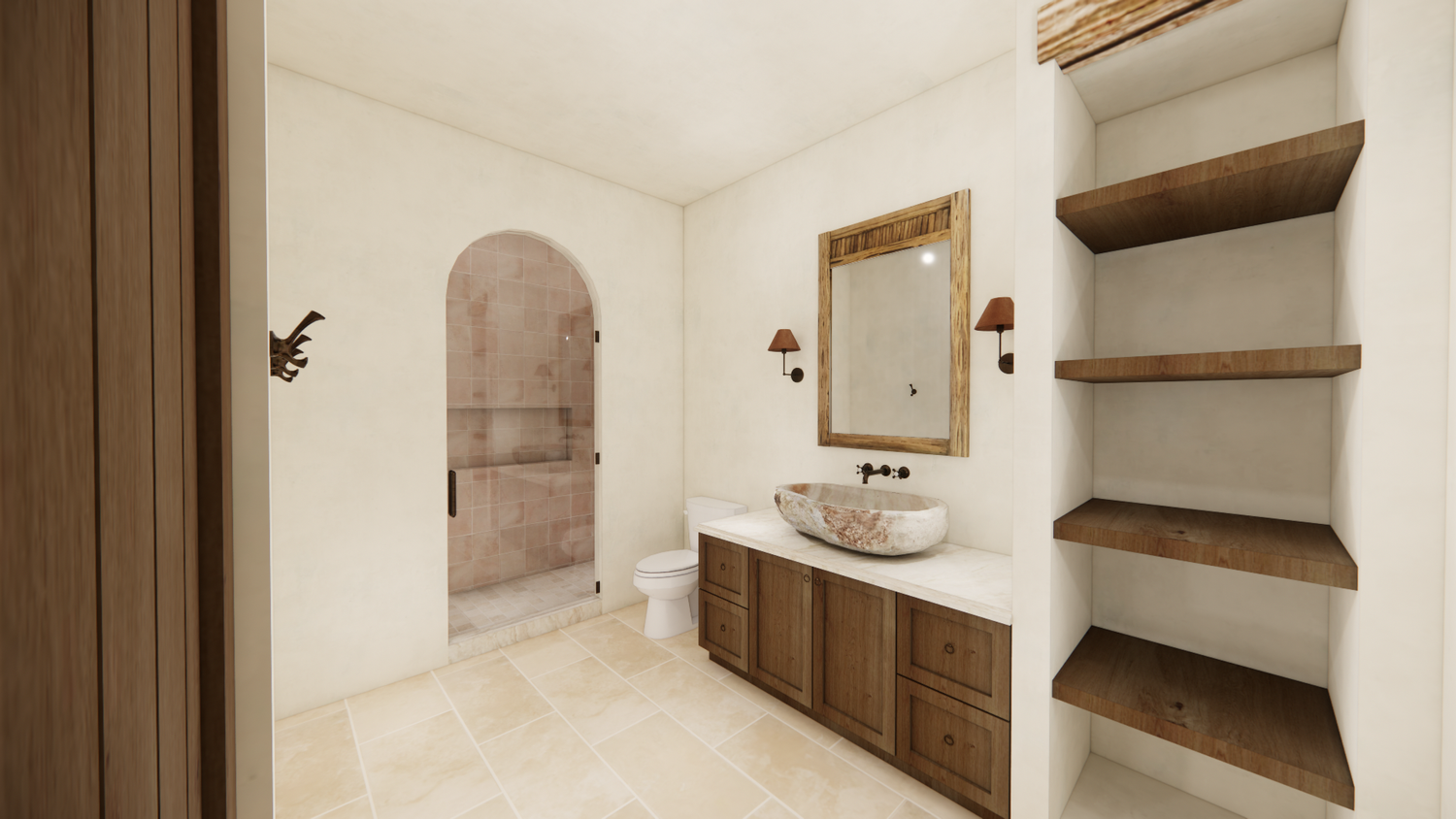
Then the collected pieces. The primary bath holds an antique stone basin sink we found at Round Top Antique Market — the kind of one-off piece that decides a room. Not reproduction. Not "inspired by." The actual thing, with patina and weight and provenance. A historic antique Spanish front door integrated into the entry. Multiple Round Top finds layered throughout — each one unrepeatable.
The most distinctly Sentenac House moment: a custom mirror handcrafted in Tucson from saguaro cactus ribs. Not shipped in from a coastal workshop. Made here, by Arizona artisans, from the land the house sits on. A piece of the desert, made by the desert, brought inside the house. That's the test every element in this project had to pass — could it only exist here?
"Nothing in this home could be reordered. That's not a design constraint — that's the entire point."— The Sentenac House Standard
Final installations and styling currently underway. Full reveal photography planned for Spring 2026. Images shown are design renderings and in-progress documentation.


What made this Studio Edit —
not just a rustic-styled new build.
Hunted, Not Ordered
Every distinctive element in this home came from somewhere specific. Round Top Antique Market for the stone basin sink — three trips before we found the right one. Spain for hardware. Tucson for the saguaro rib mirror. Aged timber beams sourced for their actual weathering, not faux-distressed from a mill. This isn't a catalog aesthetic. It's a collection assembled over months because nothing here could be reordered.
The Saguaro Rib Mirror
The most Sentenac House moment in the project. We commissioned a Tucson artisan to craft a mirror frame from saguaro cactus ribs — the skeletal remains of the desert's most iconic plant. Not shipped from California. Not "desert-inspired." Made here, by Arizona hands, from Arizona land. A piece of the desert, made by the desert, brought inside. That specificity of place — that's what Studio Edit means.
Terracotta Plaster That Took Weeks
The walls aren't painted — they're plastered. Multiple coats of terracotta plaster, hand-troweled to build texture and depth. It took weeks to get right. The color shifts with the light all day. Morning reads warm. Evening reads earthy. Drywall with paint can't do that. This finish performs — it catches light, holds shadow, ages gracefully. That's the difference between a surface treatment and material craft.
Reclaimed Beams With Actual Age
The ceiling beams aren't new wood stained to look old. They're reclaimed timbers — sourced for their weathering, their character, their history. You can see the tool marks. The cracks. The patina. That's not replicable. New beams, even beautifully milled, read as new. These read as if they've been here since the house was built — which is the entire point, since the house is brand new.
Hand-Forged Bronze Iron
The hardware — door pulls, cabinet fixtures, towel bars — was pulled and forged by hand. Not ordered from a catalog. Not mass-produced. Each piece slightly different because a human made it. Bronze that will age and patina over decades. The kind of detailing that most new builds skip because it's expensive and slow. We didn't skip it. That's Studio Edit.
Layering In Fifty Years of Age
New construction always feels new — that's the problem. Flat white walls. Sharp corners. No wear. No story. This project's entire brief was to layer in age before the family moves in. Reclaimed beams. Antique stone. Textured plaster. Collected pieces with provenance. The result: a house that feels like it's stood here for generations — even though it was finished last year. That patience, that restraint, that refusal to rush — that's what separates Studio Edit from standard new construction interiors.
Why New Construction + Aged Materials Is the Hardest Brief
Most designers approach new builds by filling them with new things. New furniture, new finishes, new fixtures. It all matches. It all photographs well. And it all feels like a hotel — clean, polished, soulless.
The opposite approach — layering aged materials into new construction — is exponentially harder. You can't just order it. You have to hunt for it. Round Top for antiques. Salvage yards for beams. Local artisans for custom work. Spain for the right hardware. Each piece takes time. Each piece is unrepeatable. And you don't know if it'll work until you've already committed to it.
That's why most new builds skip this step entirely. It's easier to order everything from one vendor and install it in a week. But "easier" doesn't produce a home that feels authored. It produces a house that could be anywhere, for anyone. This project refused that path. Every element earned its place by carrying a story the house itself didn't have yet.
The Sonoran Desert as Design Constraint
The house sits in the Sonoran Desert — which means it's surrounded by saguaro cactus, ocotillo, palo verde, creosote. That landscape dictates everything. You can't put a New England farmhouse aesthetic here. You can't import coastal minimalism. The desert insists on certain materials, certain colors, certain scale.
The saguaro rib mirror is the clearest example. We didn't decide "we want a mirror made from cactus." We decided the house needed to feel of this place — and that led us to local artisans, which led us to saguaro ribs, which led us to the mirror. The logic runs from place to material to design, not the other way around.
Same with the color palette. Terracotta plaster wasn't a Pinterest choice — it's the color of the desert soil. The aged timber reads as driftwood in the sun. The stone basin carries the same mineral tones as the surrounding rock formations. Every material belongs here because it came from here or looks like it did. That rootedness — that specificity — is what makes Studio Edit work feel inevitable instead of imposed.
The Studio Edit Standard: Could This Only Exist Here?
Every Studio Edit project has to pass one test: could this house exist anywhere else? If the answer is yes — if you could pick up the design and drop it in Nashville or Portland or Austin without changing anything — it's not Studio Edit. It's good work, maybe beautiful work, but it's not rooted.
This house passes the test. The saguaro rib mirror could only be made in Arizona. The antique Spanish door honors the region's history. The terracotta plaster echoes the desert soil. The reclaimed beams look like they've weathered under this exact sun. Even the scale of the windows — oversized, framing the horizon — is specific to the wide-open Sonoran landscape.
That's the difference between decoration and authorship. Decoration can travel. Authorship stays put. This house could only exist here, for this family, in this place. Twenty years from now, when trends have shifted and Pinterest looks completely different, this house will still feel right — because it was never chasing trends. It was chasing place.
Ready to layer fifty years of age
into your new construction?
Studio Edit new build projects like this one begin with an application. We hunt, collect, and craft — from blank shell to deeply rooted home.