Mountain cabin bedrooms require understanding both place and story. Each room tells a different chapter, but they all read as one book.
This Pinetop cabin sits on White Mountain Apache ancestral land. That geography isn't decorative — it's foundational. The three bedrooms here each tell a different story about this place: the first room honors the White Mountain Apache Tribe with historical photographs from the late 1800s and early 1900s, framed in a leaning gallery wall that references WMAT members who lived on this land generations ago. The second room celebrates Arizona mountain summer — tennis racquets and golf clubs sourced locally from the early 1900s, fishing gear, textures that read as warm-weather leisure in the pines. The third room turns toward forest winter: fur throws, velvet textiles, rich wood tones, dark forest greens that ground the space in the season.
That's Studio Edit territory: multi-room coordination where each space is distinct but all three work together as chapters in a larger story. This isn't decorating three bedrooms in isolation — it's designing relationships between rooms. The Native patterns in the first room echo through the second via locally sourced vintage pieces. The wood tones in the second room deepen into the third. The mountain landscape runs through all three, but each room interprets it differently: heritage, summer, winter. That kind of thematic layering — where each room serves its own purpose but relates to the whole — is what makes Studio Edit work feel cohesive instead of collected.
The challenge was balancing distinctness with coordination. Each room needed to feel like its own space — guests should walk into the Apache tribute room and know immediately what story it's telling. But when you move from room to room, they can't feel like three different houses. The material palette coordinates: natural wood, warm neutrals, textiles that reference the mountains. The furniture scale stays consistent. The vintage antique pieces create a throughline (early 1900s tennis equipment in one room, early 1900s WMAT photos in another). That's the Studio Edit skill: designing for relationships between spaces, not just individual rooms.
"Mountain cabin bedrooms require understanding both place and story. Each room tells a different chapter, but they all read as one book."— The Studio Edit Standard
Room One — White Mountain Apache Heritage

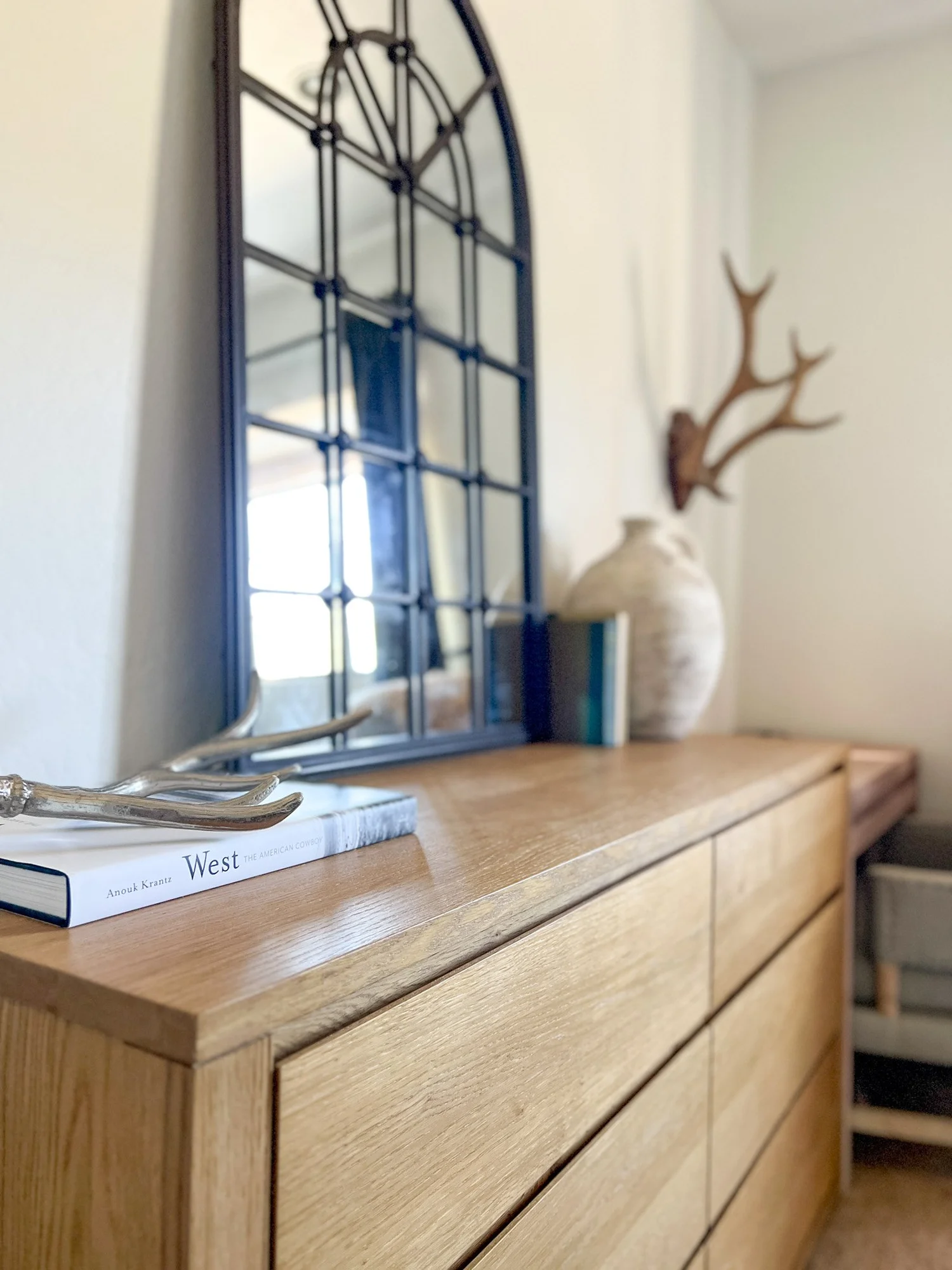


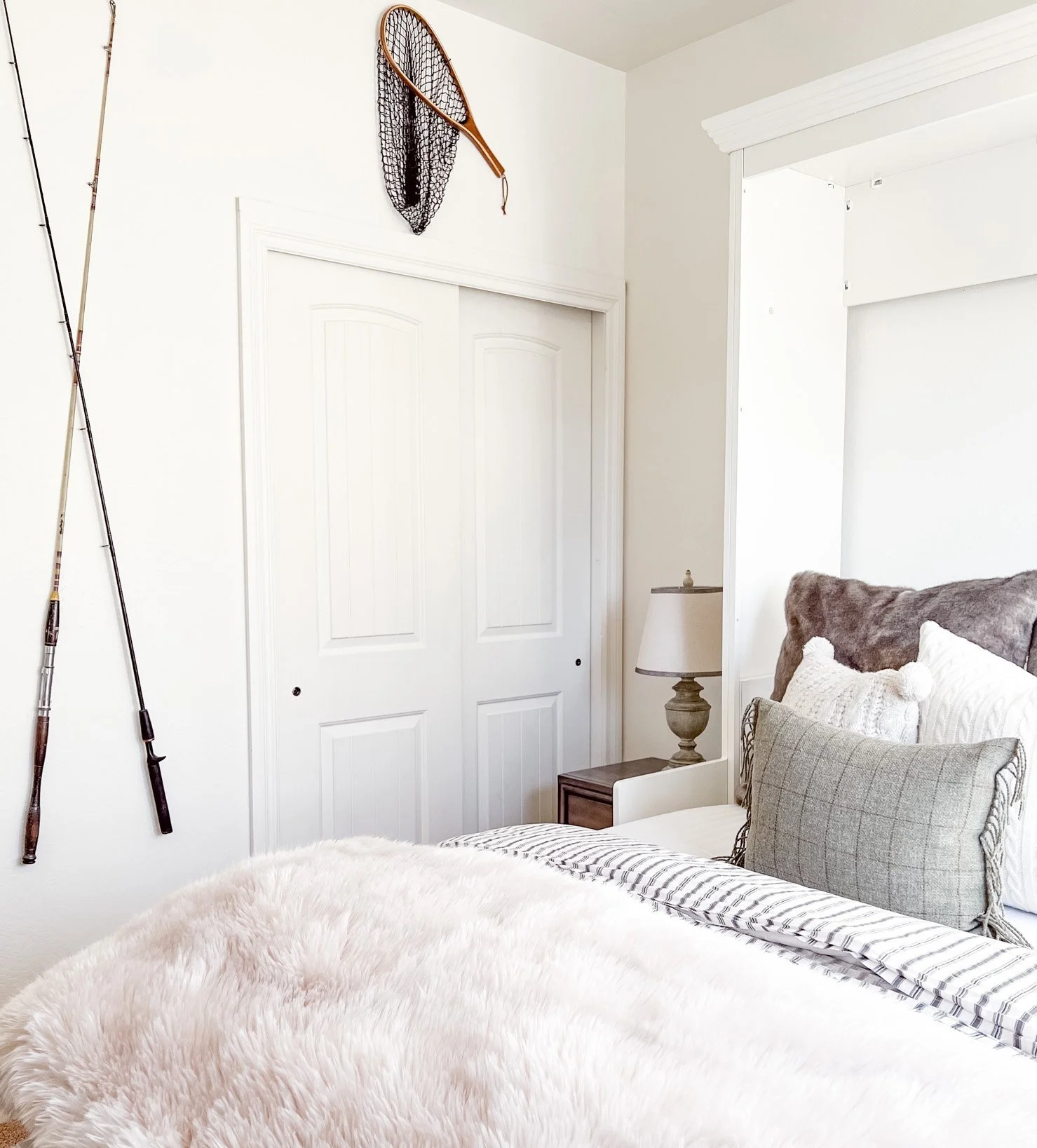
Room Two — Arizona Mountain Summer


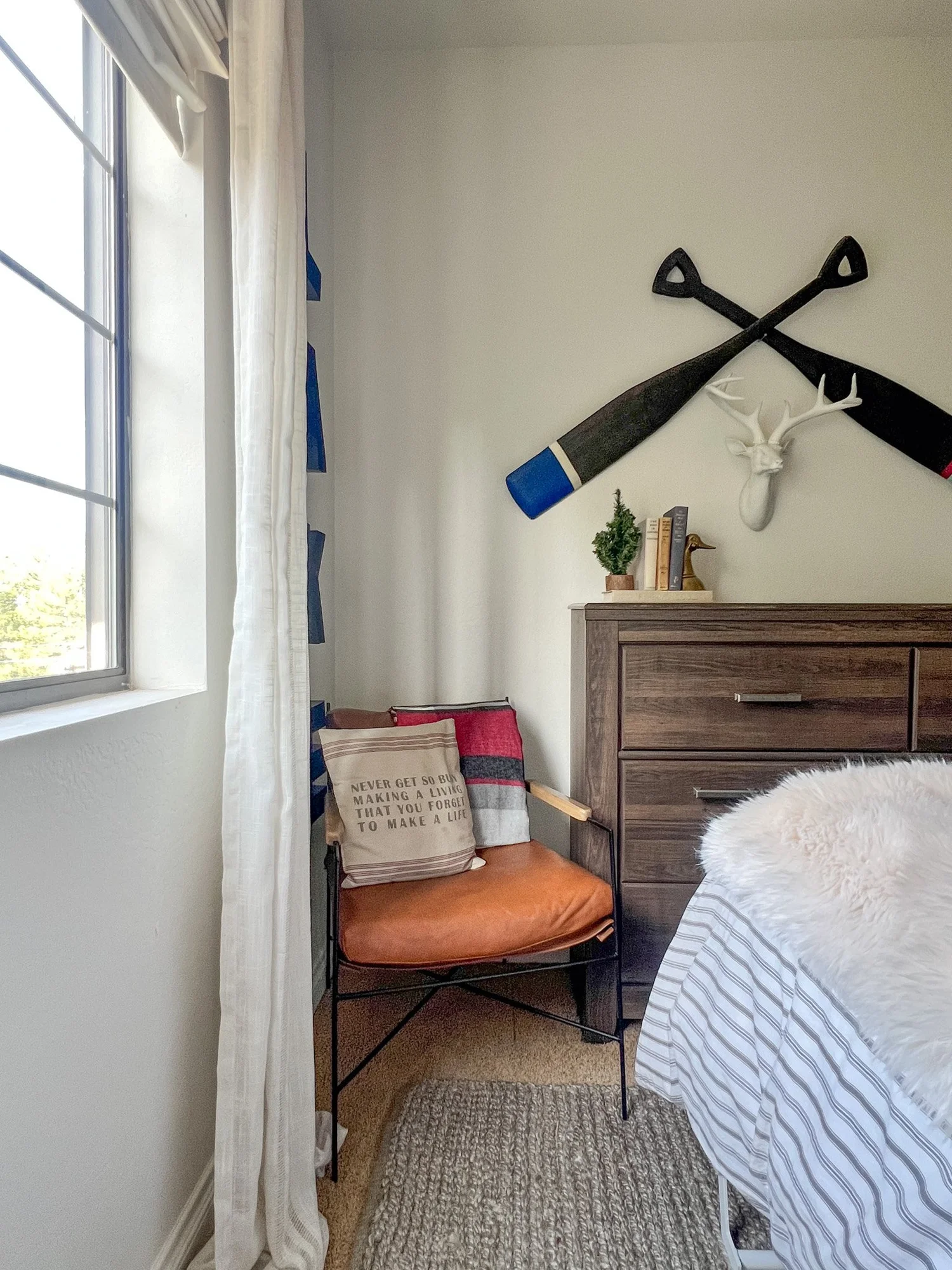
Room Three — Forest Winter



What made this Studio Edit —
not just three bedrooms.
Three-Bedroom Coordination
This isn't three separate bedroom designs that happen to share a house. This is Studio Edit multi-room coordination: each bedroom tells its own story (Apache heritage, mountain summer, forest winter), but all three work together as chapters in a larger narrative about this place. The material palette repeats across rooms (natural wood, warm neutrals, textiles that reference mountains). The furniture scale stays consistent. The vintage pieces create throughlines (early 1900s antiques in multiple rooms). That's Studio Edit thinking: designing relationships between spaces, not just furnishing rooms in isolation.
Place-Specific Storytelling
Pinetop sits on White Mountain Apache ancestral land. That geography isn't decorative — it's the foundation for everything here. Each bedroom interprets the White Mountains differently: one honors the Apache Tribe through historical photographs, one celebrates Arizona mountain summer through vintage sports equipment, one grounds the space in forest winter through textures and palette. That place-based storytelling — where design decisions emerge from actual context rather than Pinterest trends — is what makes homes feel rooted instead of styled. And that level of narrative thinking is Studio Edit specialty.
Locally Sourced Antiques
The vintage pieces here aren't generic antique mall finds — they're locally sourced from the White Mountains area, specific to this place and time: tennis racquets from early 1900s mountain resorts, golf clubs from the same era, fishing gear that references mountain lake culture. Those pieces aren't just decor — they're artifacts that tell stories about how people have used these mountains for leisure across generations. That level of curation — finding pieces that are both beautiful and historically grounded in place — requires research, sourcing skill, and understanding of regional history. That's Studio Edit material thinking.
Historical Photo Curation
The first bedroom features a leaning gallery wall of historical photographs showing White Mountain Apache Tribe members from the late 1800s and early 1900s. Those aren't stock images — they're actual historical photos of WMAT members who lived on this land generations ago. That level of research and curation (finding appropriate historical imagery, framing it thoughtfully, creating a gallery arrangement that honors rather than appropriates) requires sensitivity, historical knowledge, and design skill. That kind of place-honoring storytelling is what Studio Edit work does well: respecting history while creating contemporary spaces.
Thematic Layering Across Rooms
Each bedroom has a distinct theme (Apache heritage, mountain summer, forest winter), but they layer together into one cohesive mountain narrative. The Native patterns in room one echo through room two via vintage pieces. The wood tones in room two deepen into room three. The mountain landscape runs through all three spaces, but each room interprets it differently. That thematic layering — where rooms are distinct but coordinated, individual but related — is what makes multi-room projects feel like thoughtful wholes instead of decorated collections. And that's the Studio Edit differentiator: coordination across spaces, not just furnishing individual rooms.
Multi-Room Material Coordination
Studio Edit projects require material coordination across multiple spaces. All three bedrooms here share a material language: natural wood tones, warm neutrals, mountain-appropriate textiles (fur, velvet, leather), vintage pieces from similar eras. But each room interprets that language differently — room one uses it to honor heritage, room two uses it for summer warmth, room three uses it for winter richness. That balance — coordination without sameness, cohesion without repetition — is what makes multi-room work successful. And it's exactly what Studio Edit delivers: rooms that work together without feeling identical.
Why Multi-Room Coordination is Studio Edit Territory
Single-room transformations (Junior Studio) work in isolation — one space, one story, one set of decisions. Whole-home projects (Signature) require comprehensive systems thinking across 10+ spaces. Studio Edit lives in the middle: multi-room coordination where 2-4 spaces need to work together as a cohesive narrative. That's exactly what these three bedrooms required: each room needed its own distinct identity (Apache heritage, mountain summer, forest winter), but all three had to coordinate through shared materials, palette, scale, and place-based narrative.
The challenge in Studio Edit work isn't just making each room beautiful — it's designing relationships between rooms. The material palette has to repeat without becoming monotonous. The thematic narrative has to thread through spaces without feeling heavy-handed. The vintage pieces have to create throughlines without looking like a museum. That coordination skill — balancing distinctness with cohesion — is what separates Studio Edit from both single-room projects (which don't need to coordinate with anything) and whole-home projects (which coordinate everything systematically). Studio Edit is selective coordination: deciding which rooms relate to each other and how.
Place-Based Storytelling vs. Generic Decoration
These three bedrooms could have been decorated in "mountain cabin style" using generic rustic furniture, plaid textiles, and Pinterest-perfect moose art. Instead, they tell specific stories about this specific place: White Mountain Apache ancestral land. That specificity — using historical WMAT photographs, locally sourced early-1900s antiques from mountain resorts, material palettes that reference actual Arizona mountain seasons — is what makes design feel rooted instead of styled.
Place-based storytelling requires research. You can't honor the White Mountain Apache Tribe without understanding WMAT history. You can't curate early-1900s mountain leisure antiques without knowing what activities happened in these mountains and where to source those pieces. You can't design forest winter textures without understanding how Arizona mountain winters actually feel (not Minnesota winters, not Colorado winters — Arizona high country specifically). That level of place-specific design thinking is Studio Edit specialty: we're not decorating rooms in "cabin style" — we're telling stories about specific places through design.
Honoring Heritage Without Appropriation
The first bedroom honors the White Mountain Apache Tribe, whose ancestral land includes Pinetop. That kind of tribute requires careful handling — there's a fine line between honoring heritage and appropriating imagery. The approach here: historical photographs of actual WMAT members from the late 1800s and early 1900s, framed respectfully in a leaning gallery arrangement. No dream catchers. No generic "Native patterns." No mass-produced "tribal" textiles. Just historical photographs that document the people who lived on this land, presented thoughtfully.
That restraint — knowing what not to do, understanding the difference between tribute and appropriation — is part of Studio Edit design thinking. We're not here to extract aesthetic elements from cultures for decoration. We're here to honor place and history through thoughtful design. And sometimes that means the most respectful approach is the simplest one: historical photographs, natural materials, space for the story to speak without over-designing it. That's the kind of cultural sensitivity that Studio Edit work requires.
Ready for multi-room
bedroom coordination?
Studio Edit transformations where each space is distinct but all rooms read as one story. Not decoration — place-based narrative.